
Polynesian
Bold black patterns built for the body they sit on: Samoan, Marquesan and Maori-rooted work that reads from across the street and ages for decades.

The style
Pattern that follows the muscle
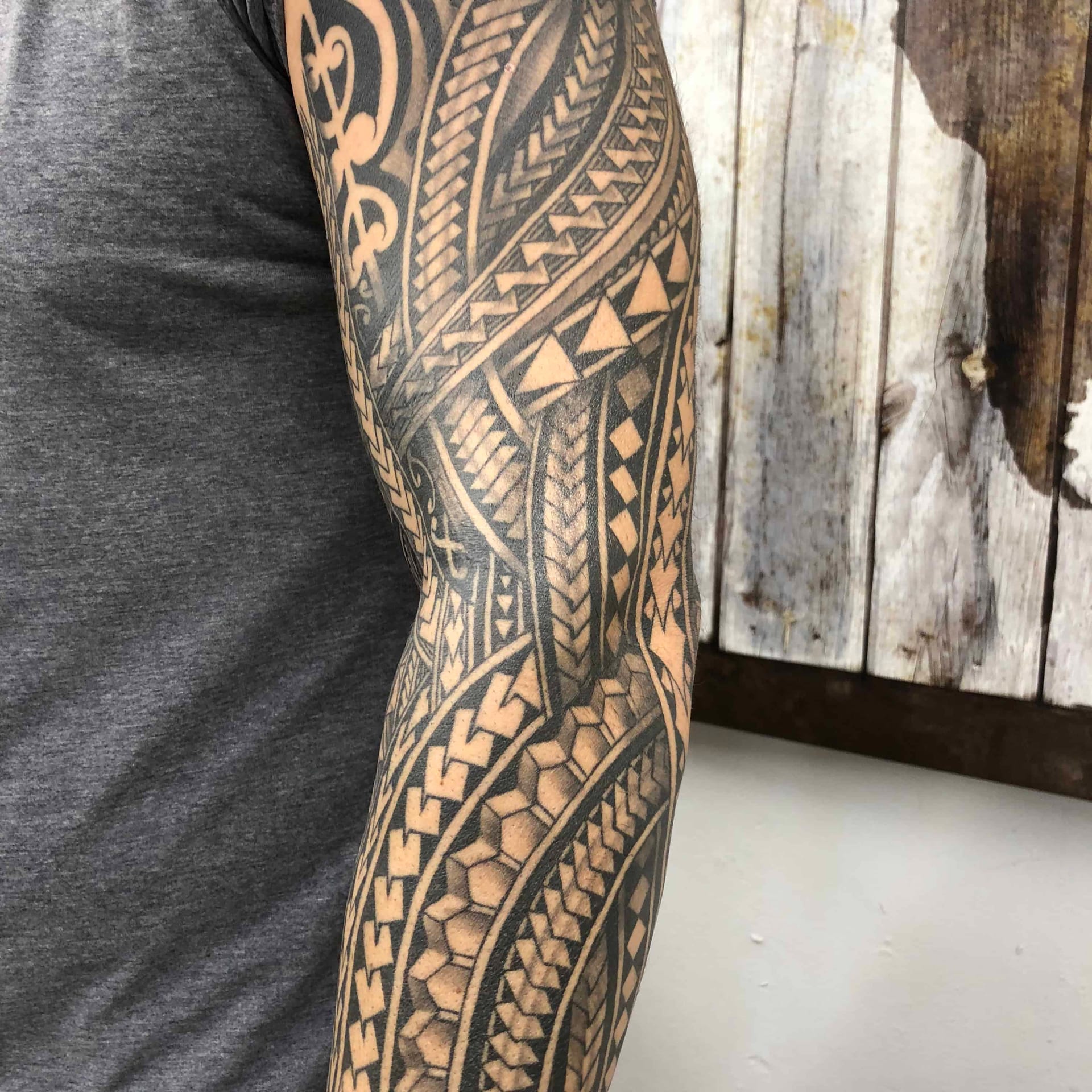
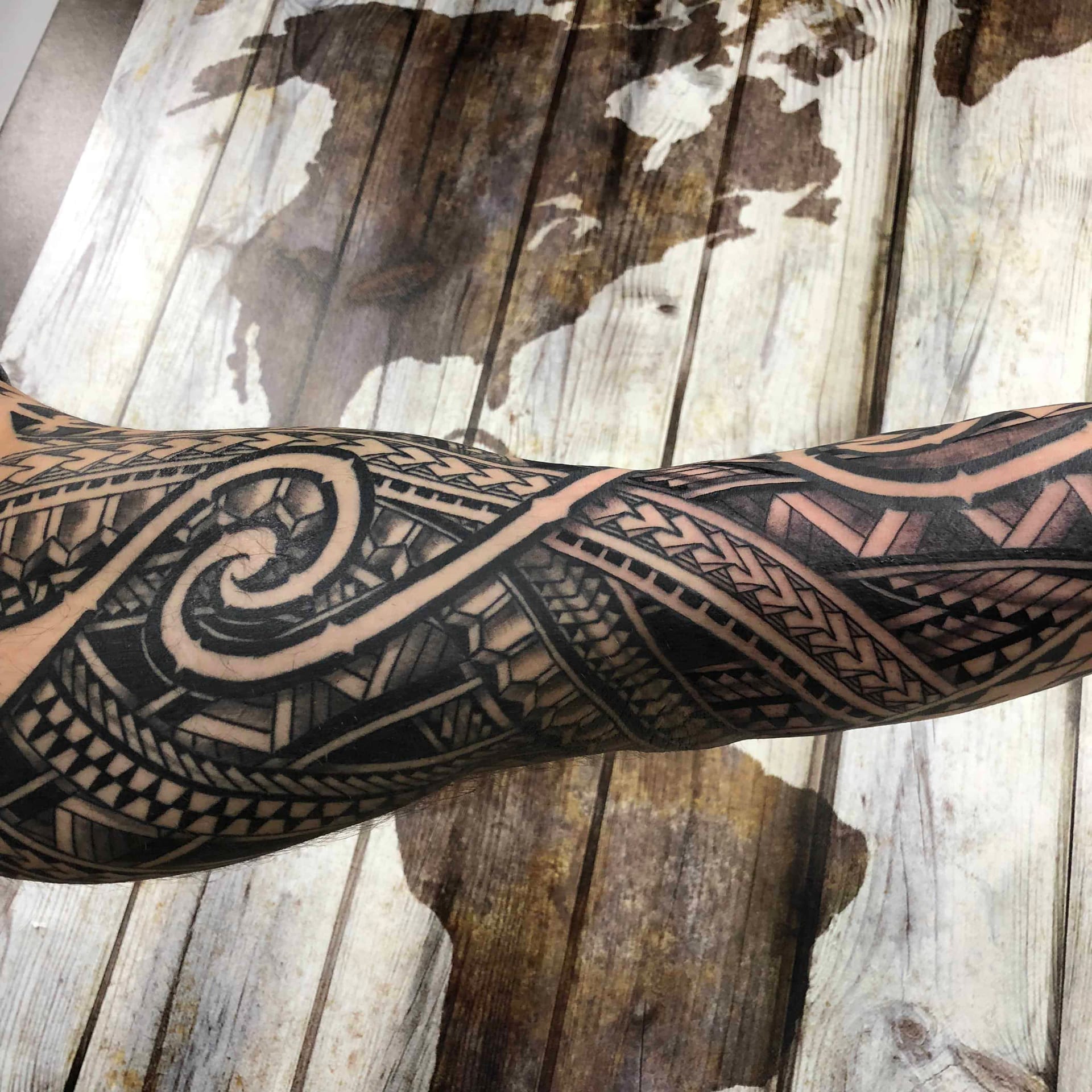
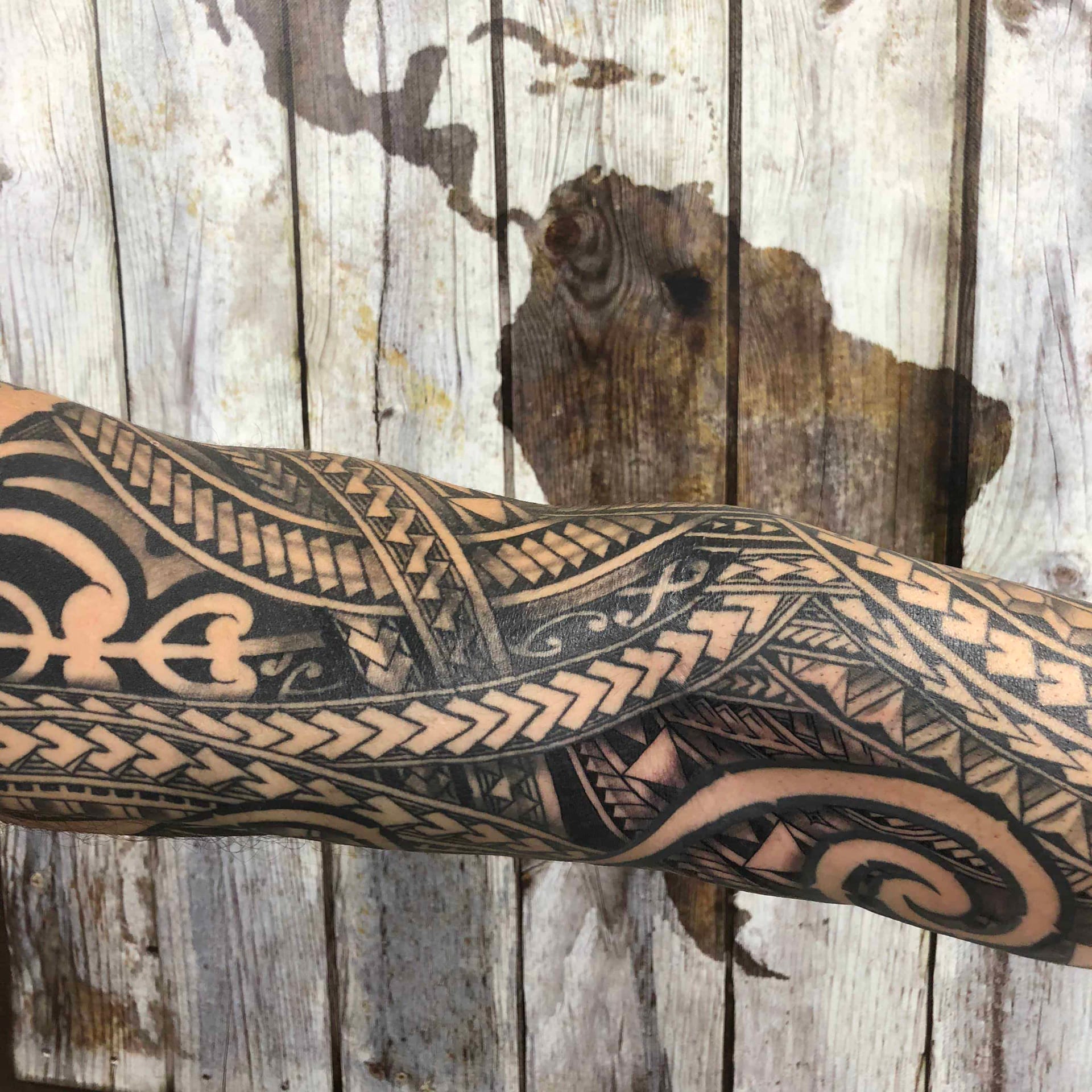
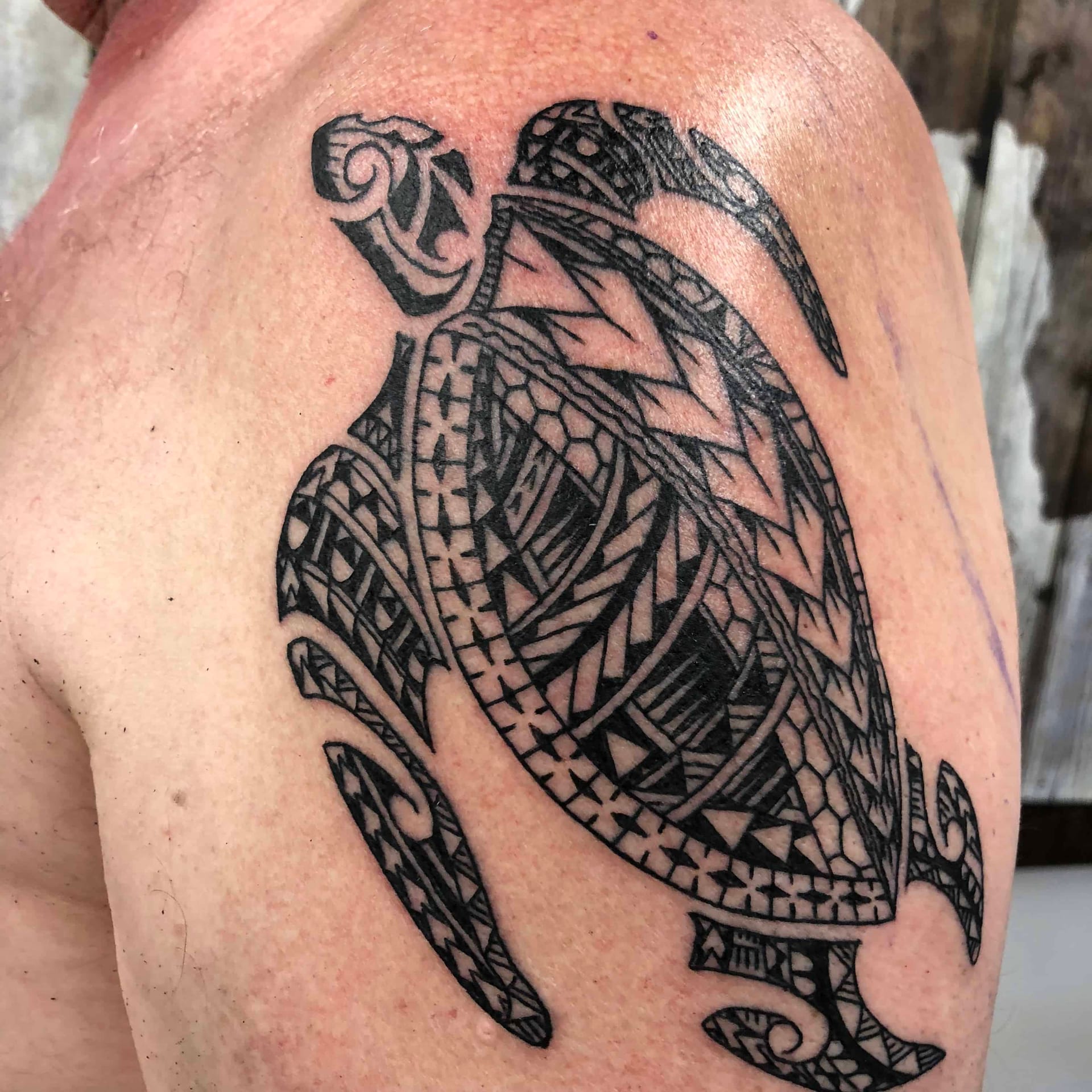
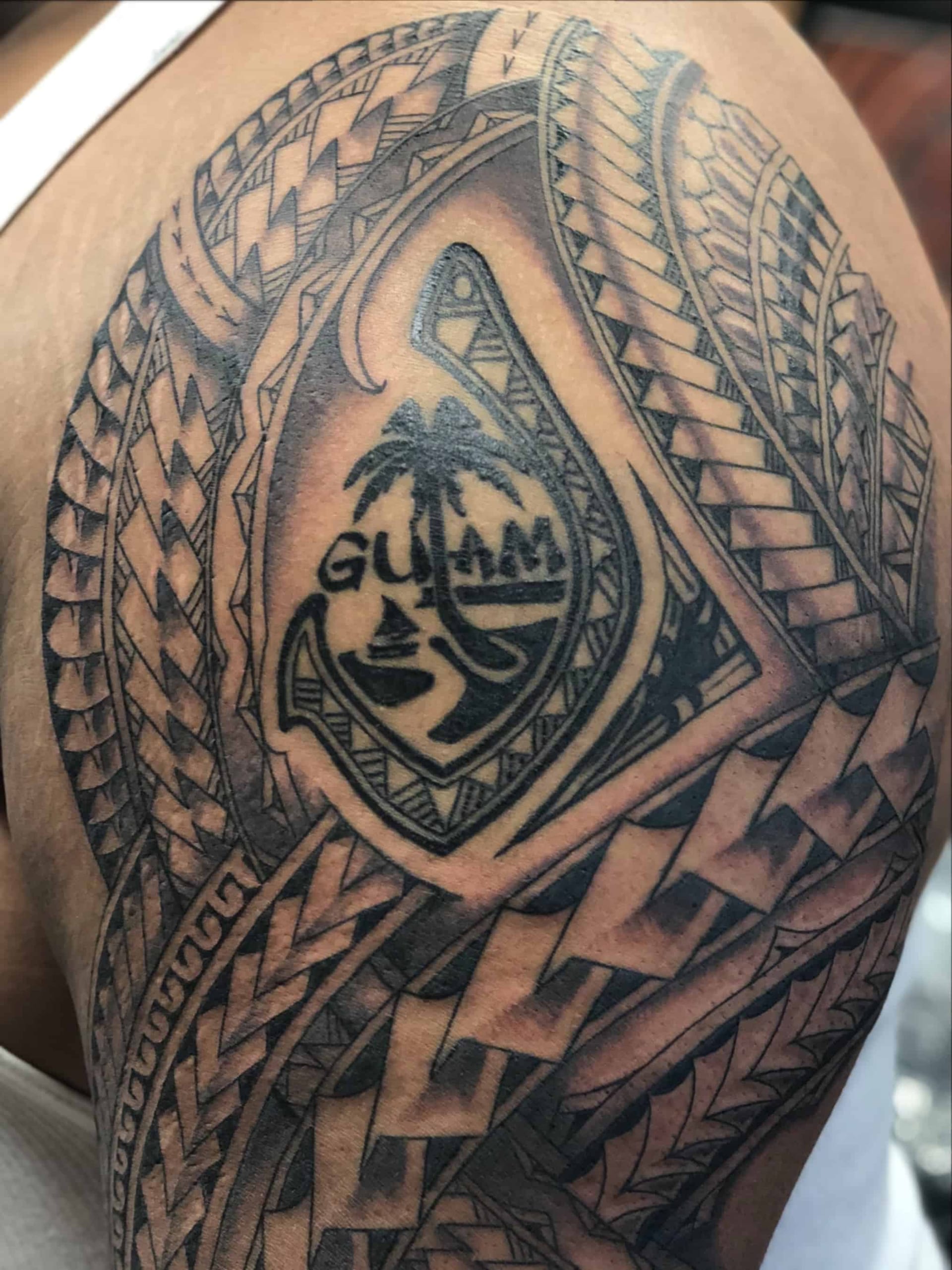
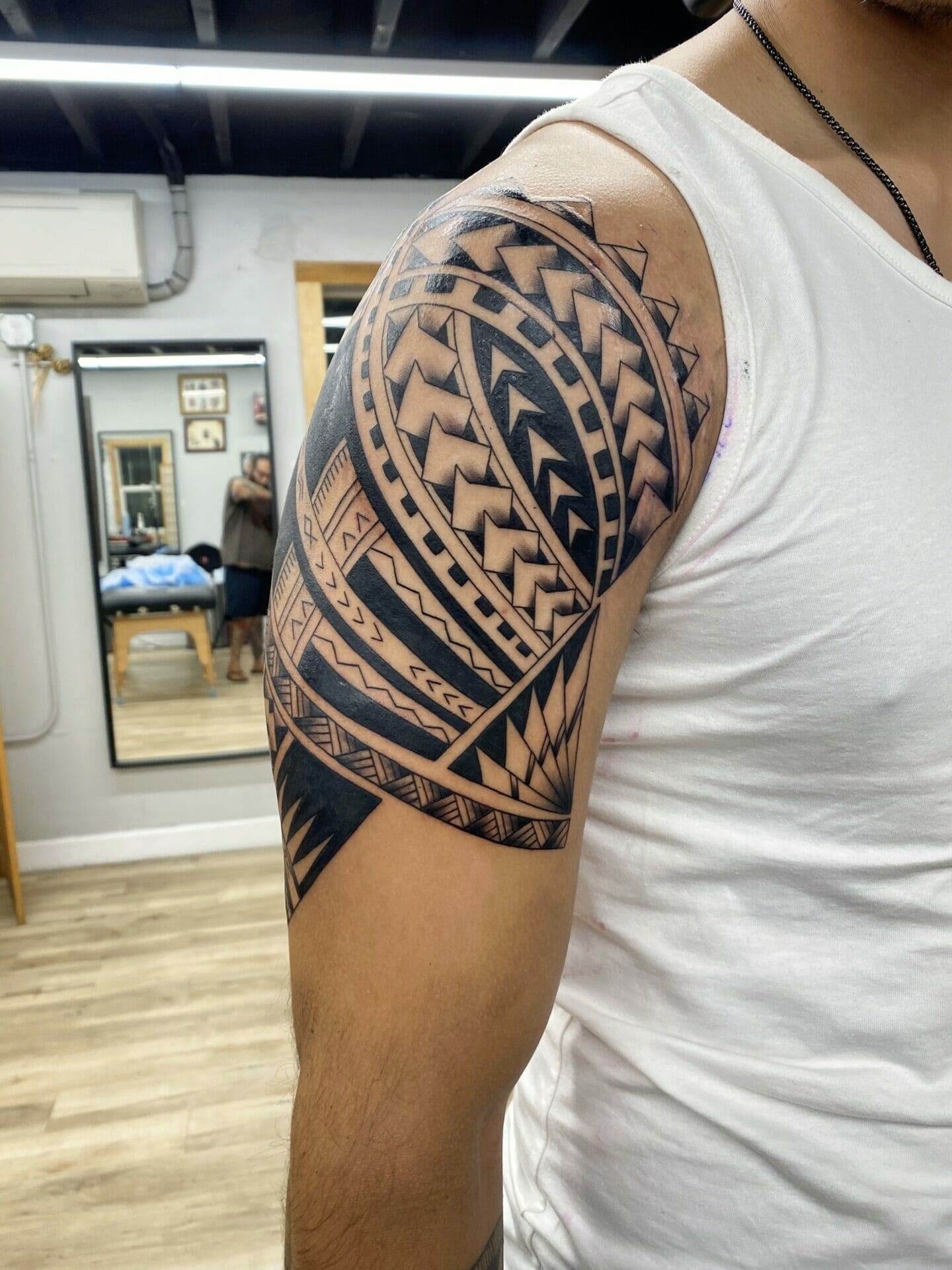
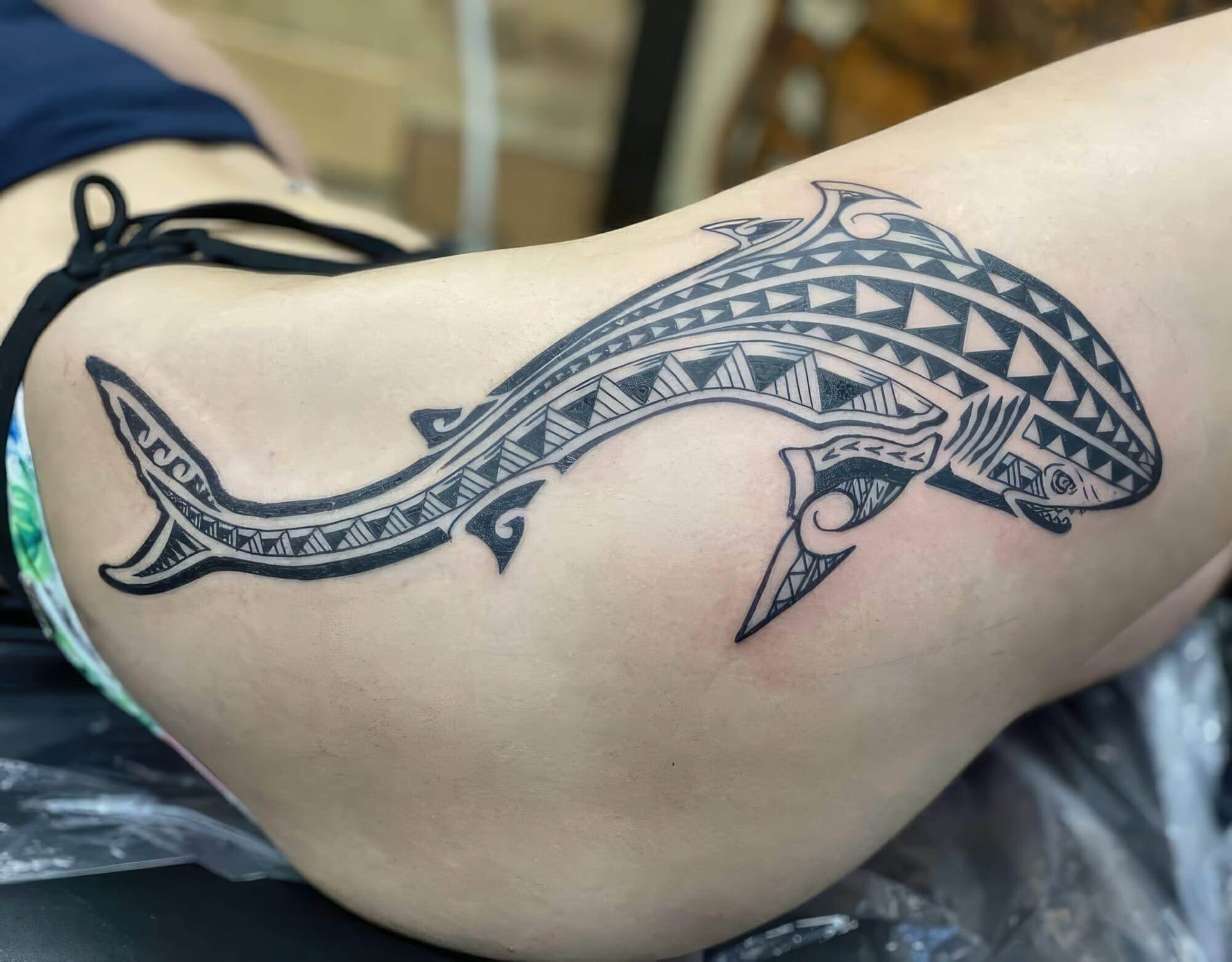
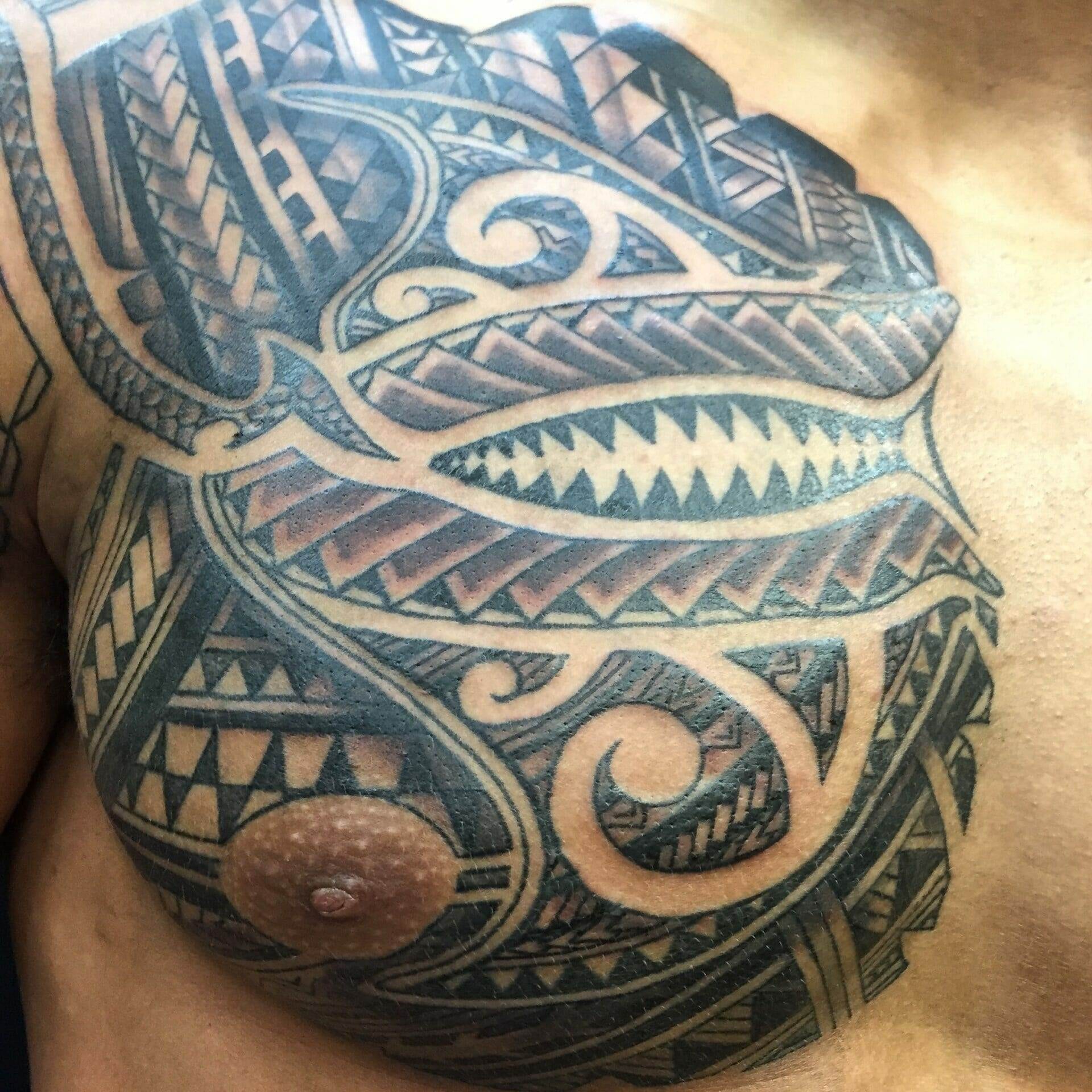
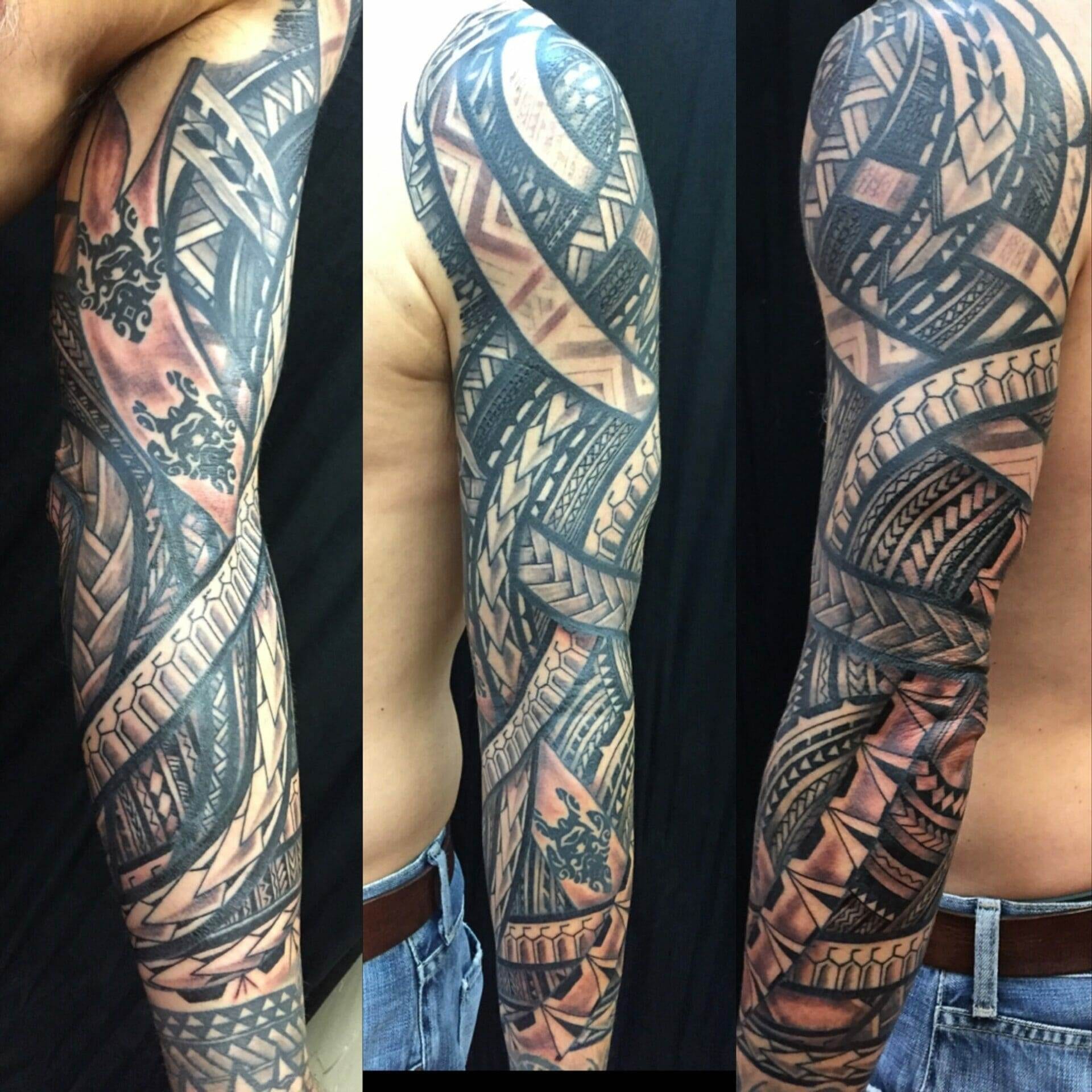
Polynesian work is black, geometric and built for the limb it covers. The patterns come from island traditions with their own meanings: Samoan pe'a and malu, Marquesan tiki and enata, Maori koru and spirals. A good piece is drawn on the body, not on paper, so every band follows the muscle under it.
Because it is solid black with wide negative space, it is the style that ages best of all. It also hides nothing: straight lines and even fills show every wobble of the hand, which is why it is slow, careful work that the artist plans for the whole limb before the first line goes on.
Work
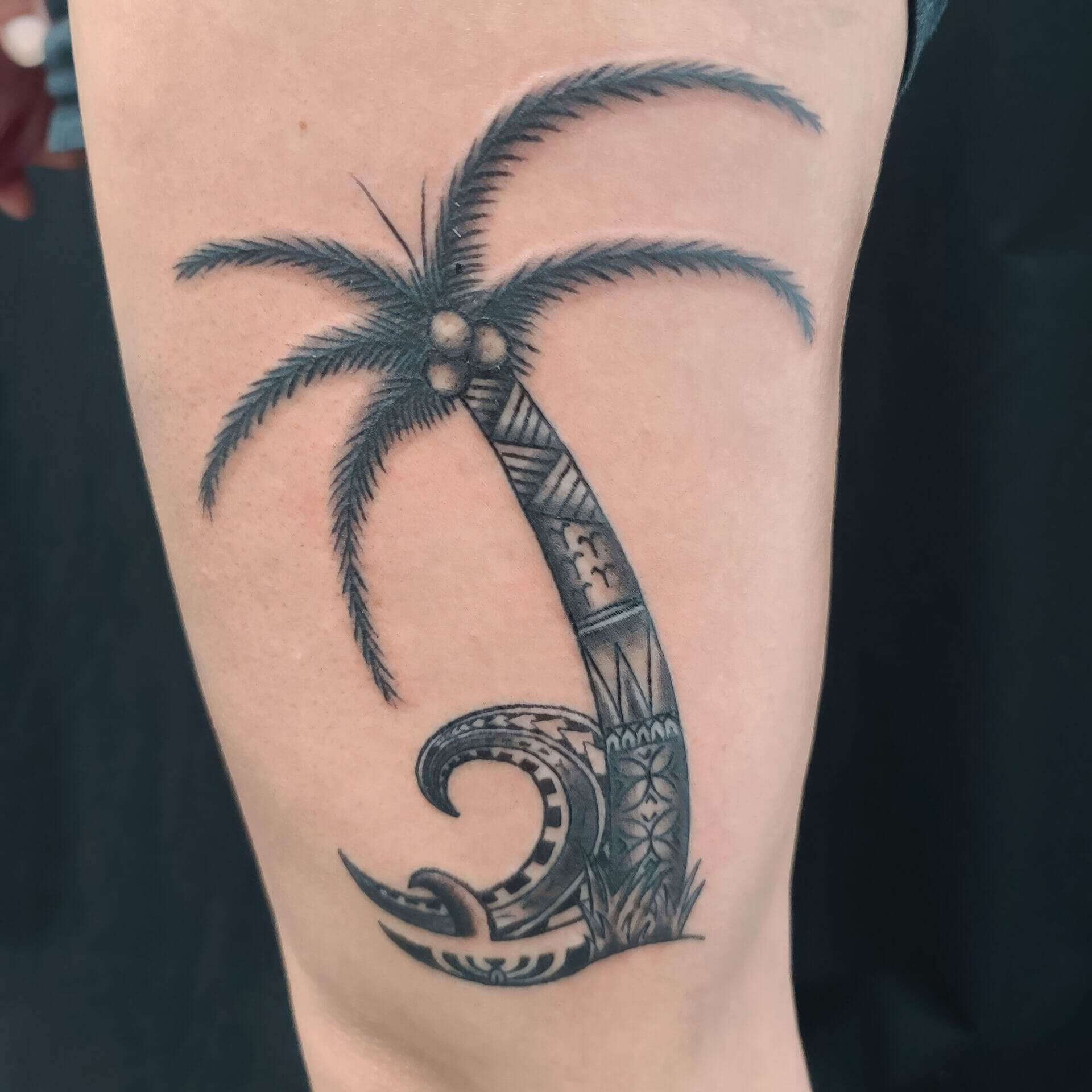
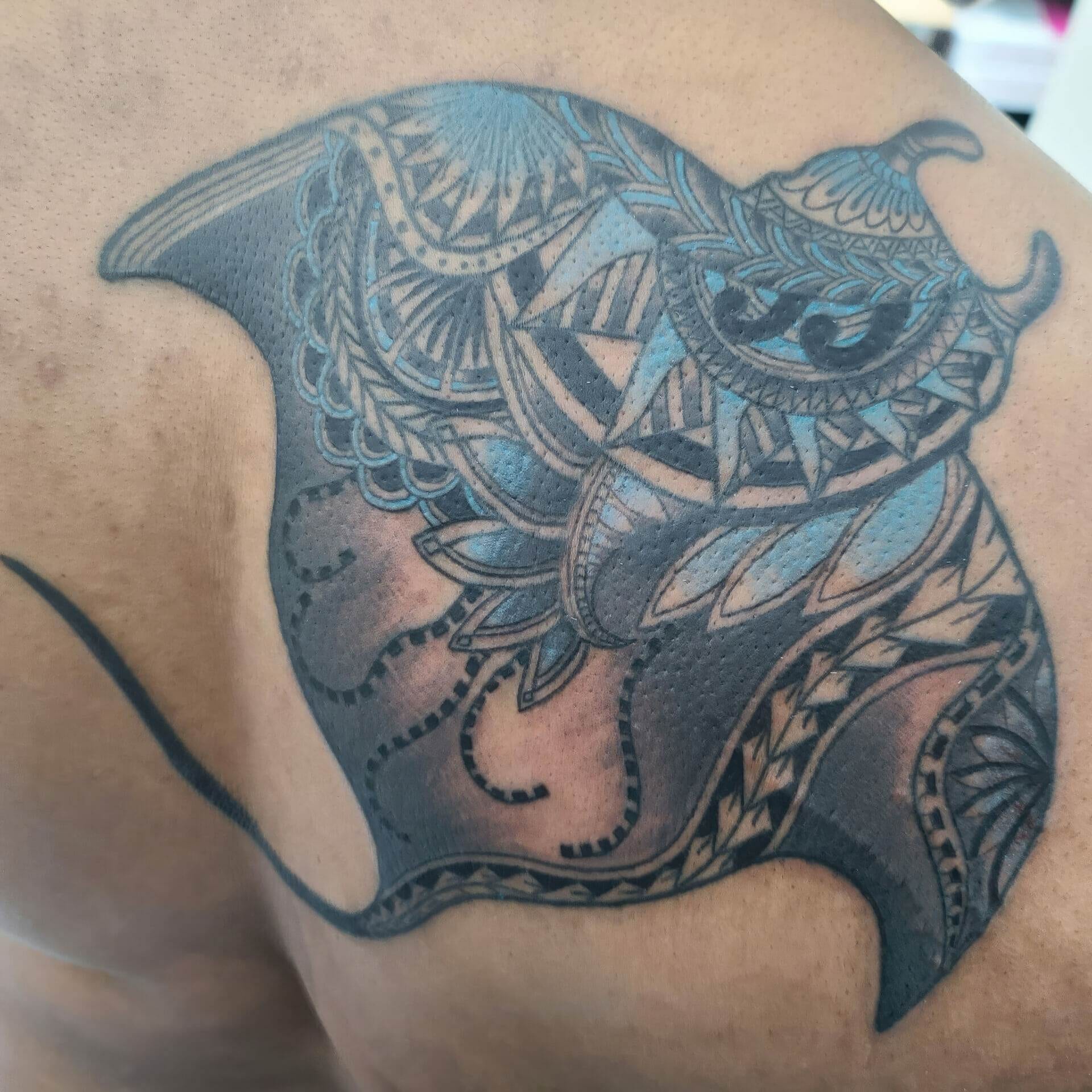
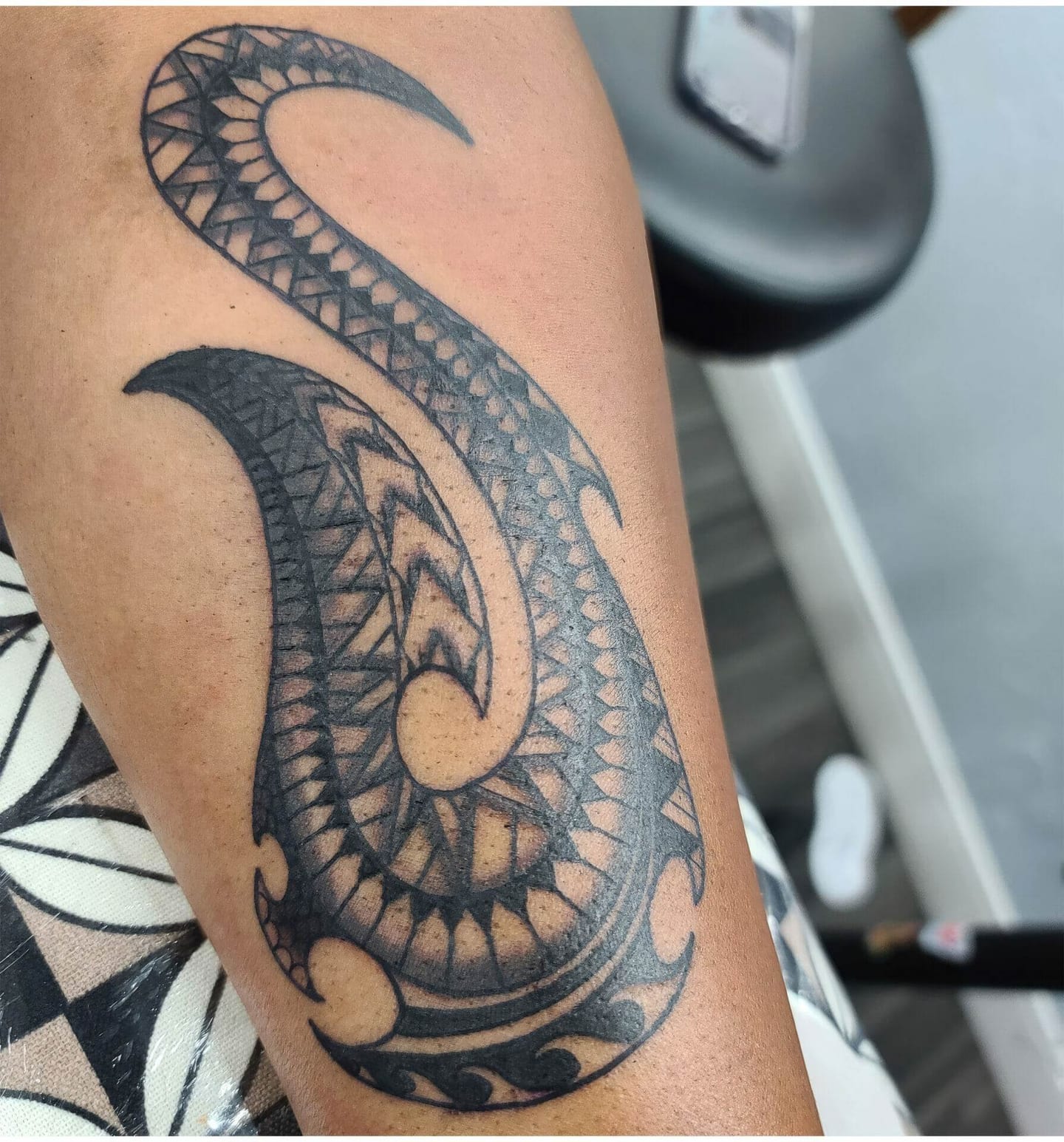
Polynesian work from the shops
What to expect
Who to ask for Polynesian
Skott Kautman
Black and grey · Horror · Japanese
Large, black, drawn on you
Most Polynesian pieces are half or full sleeves, calves, chest panels or shoulder caps. The artist freehands the layout on your skin with markers before any needle, so the consultation is about the body part and the story, not a printout.
If you have heritage in a specific island tradition, say so: the patterns differ and the artist chooses accordingly. If you do not, the artist designs in the tribal manner without borrowing sacred motifs, so the piece is yours and respectful.
At a glance
- Ink
- Black only
- Size
- Bands to full sleeves
- Sessions
- Several for large work
- Ageing
- The best of any style
- Drawn
- Freehand on the body
Questions people ask
Do I need Polynesian heritage to get one?
No, but tell your artist what your background is. Sacred motifs from a specific tradition are reserved; tribal pattern work in the Polynesian manner is open to anyone.
Can it be done in color?
Traditional Polynesian work is black. Color accents are possible but move the piece toward a different style; talk it through at the consultation.
How many sessions does a sleeve take?
Several, spaced for healing. The artist gives you a plan at the consultation after seeing the arm and the amount of fill.