
Geometric and mandala
Sacred geometry, mandalas, ornamental symmetry and pattern, measured to the body so the symmetry stays true when you move.

The style
Symmetry on a surface that is not flat
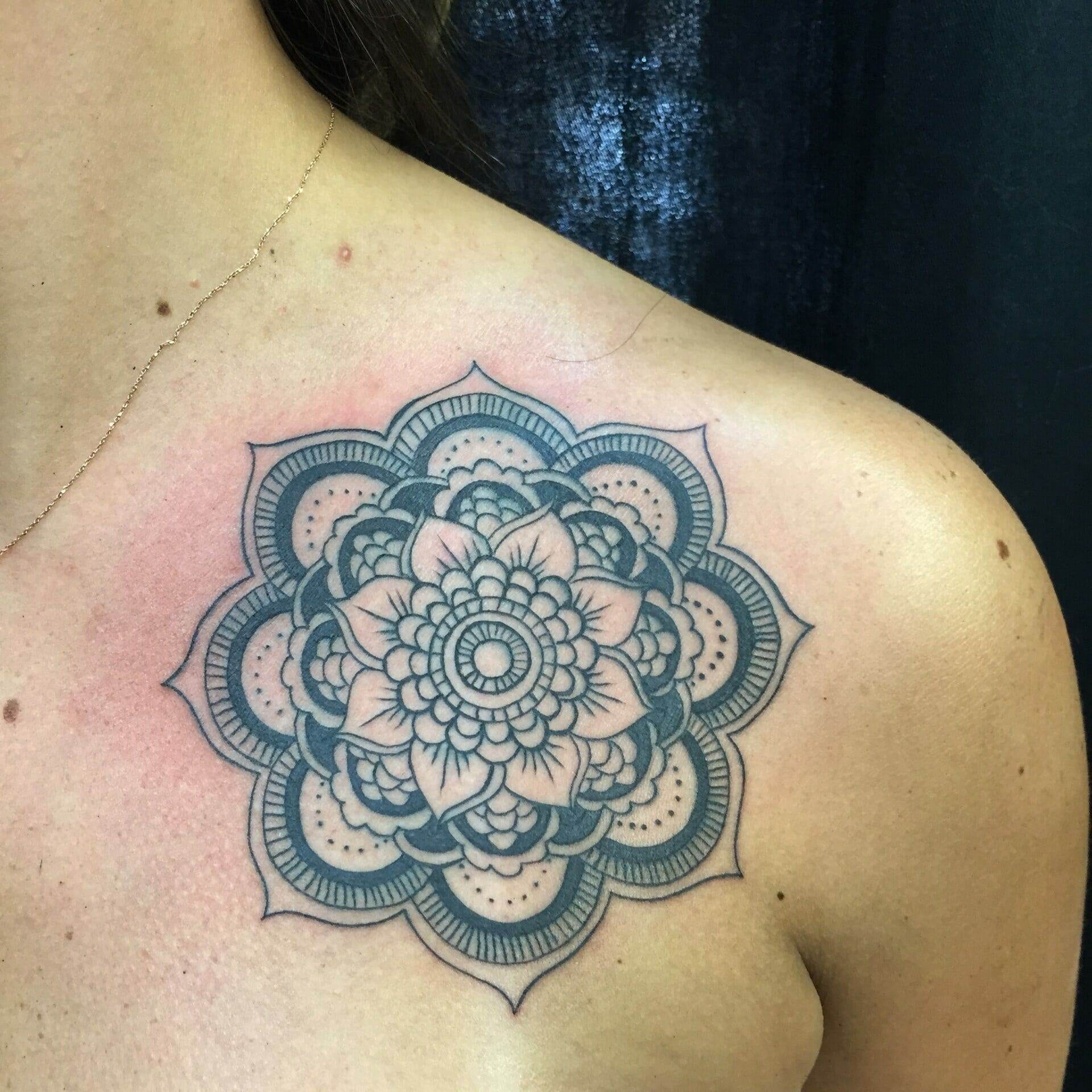
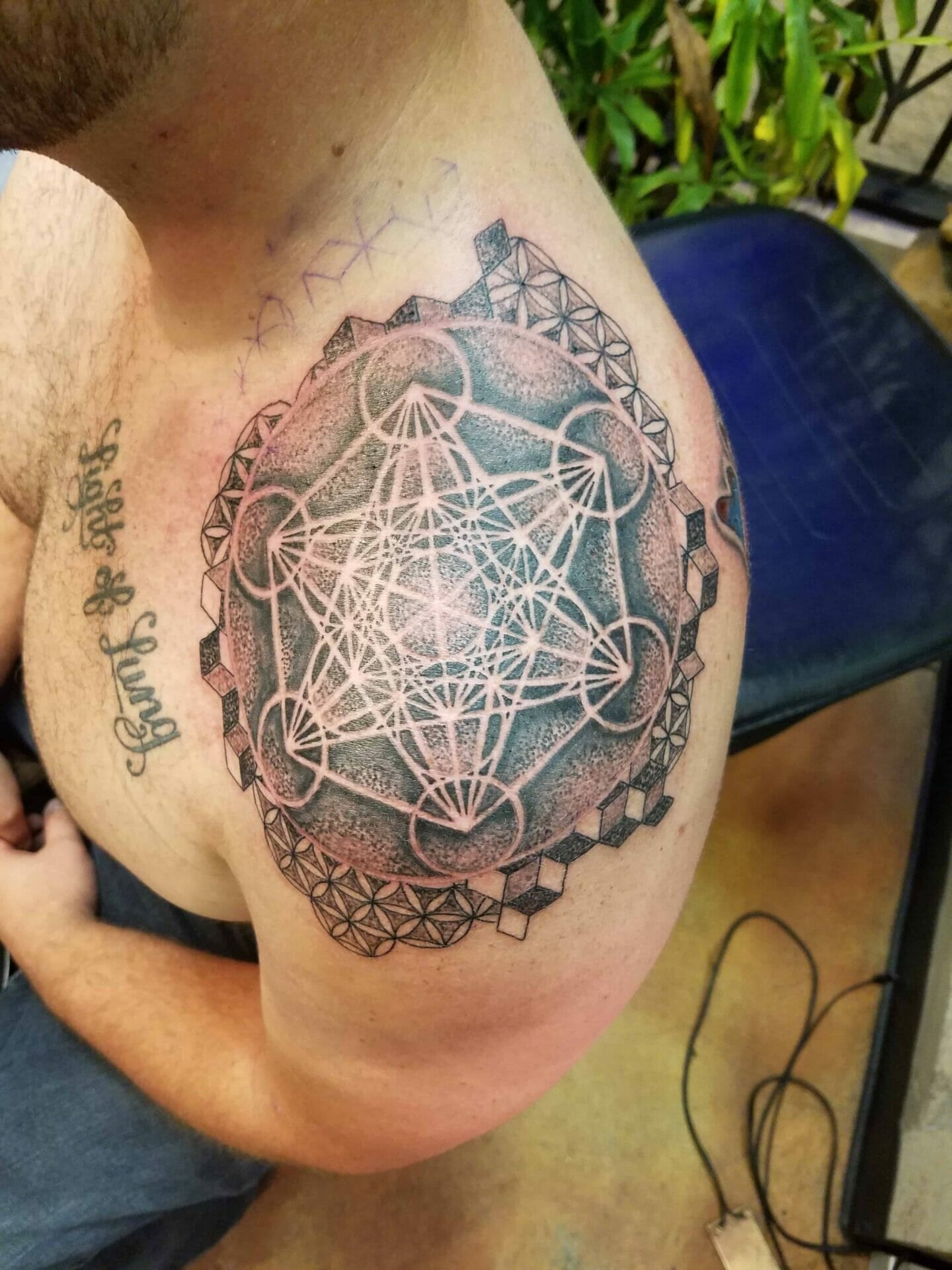
Geometric work is pattern with rules: mandalas radiating from a center, sacred-geometry figures, ornamental lace and tessellation. The difficulty is the body. A perfect circle on paper is an oval on a shoulder, so the design is measured and drawn on you.
It reads clean and modern, and it combines well with dot work, blackwork and florals. Because the pattern has rules, every mistake shows, which is why the layout takes longer than the tattooing and why the artist measures the body before drawing anything at all.
Work
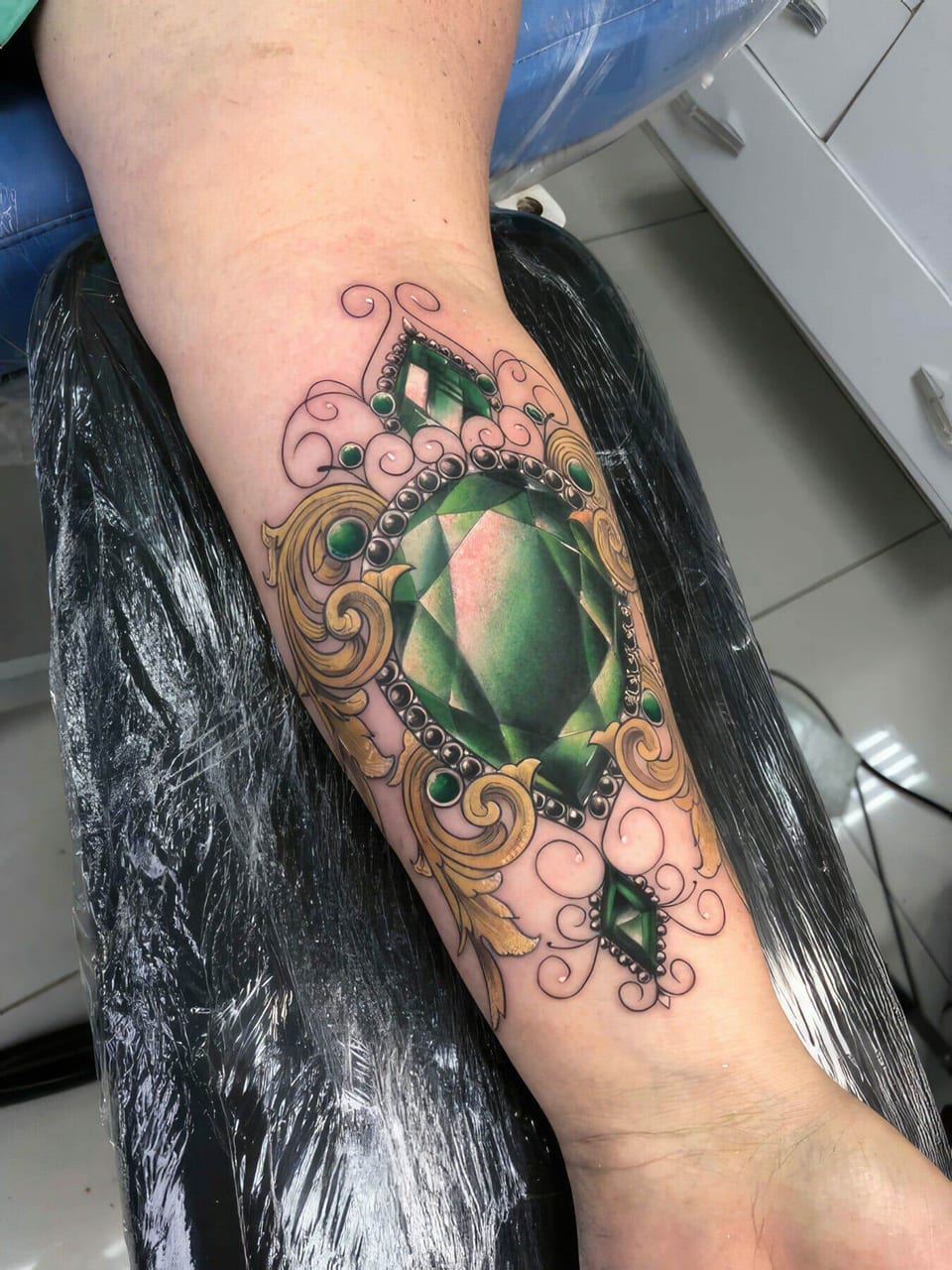
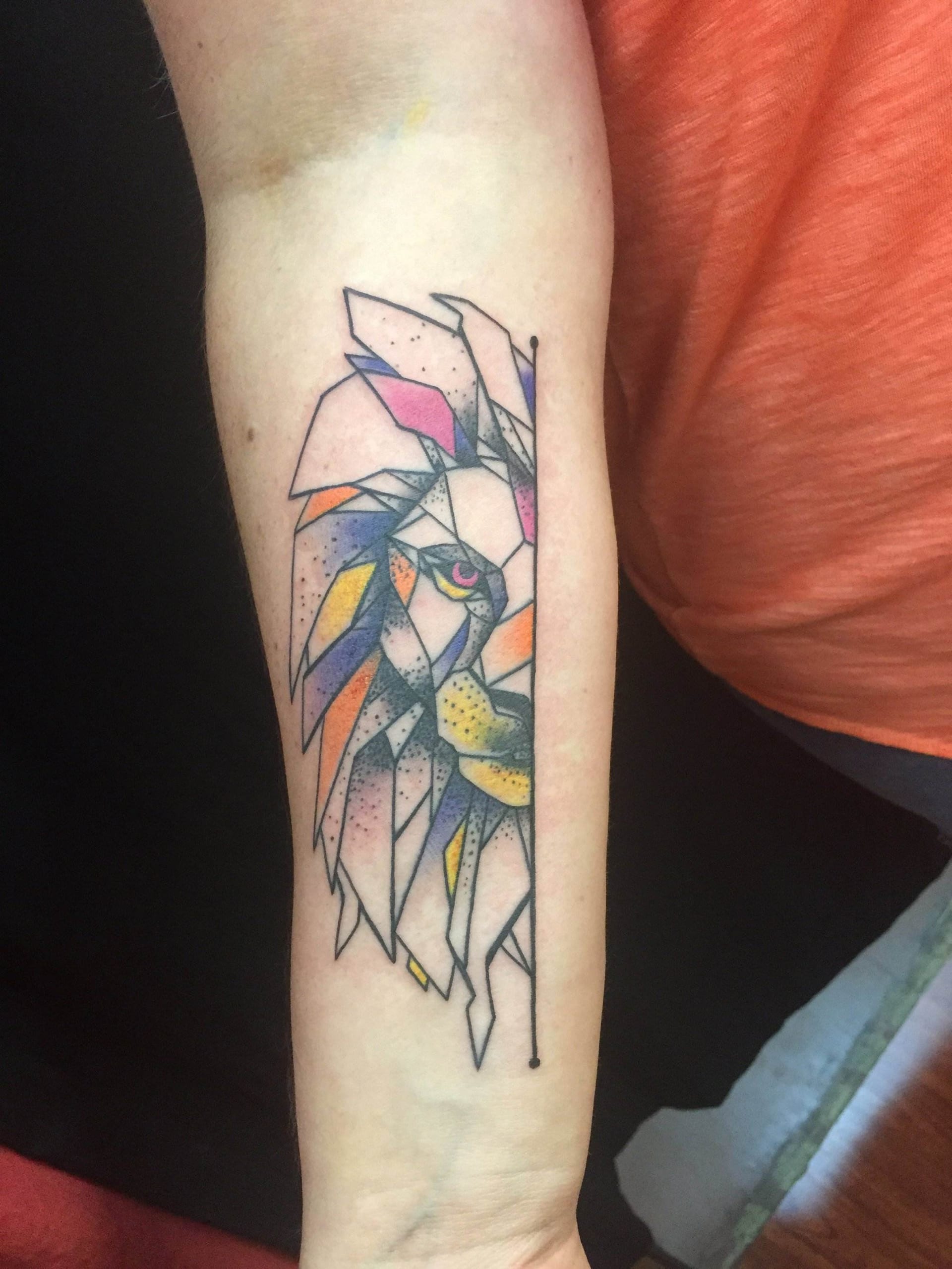
Geometric work from the shops
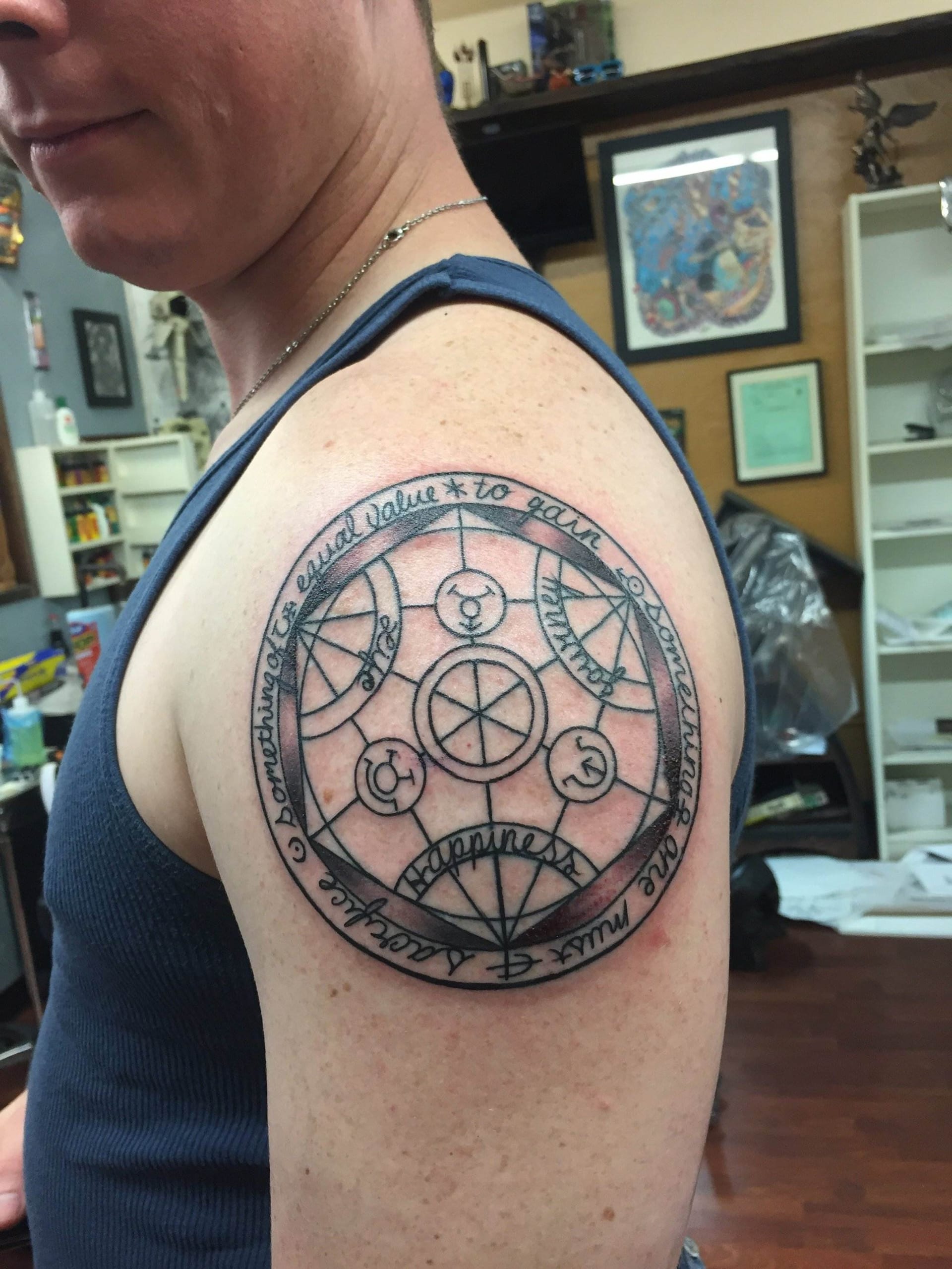
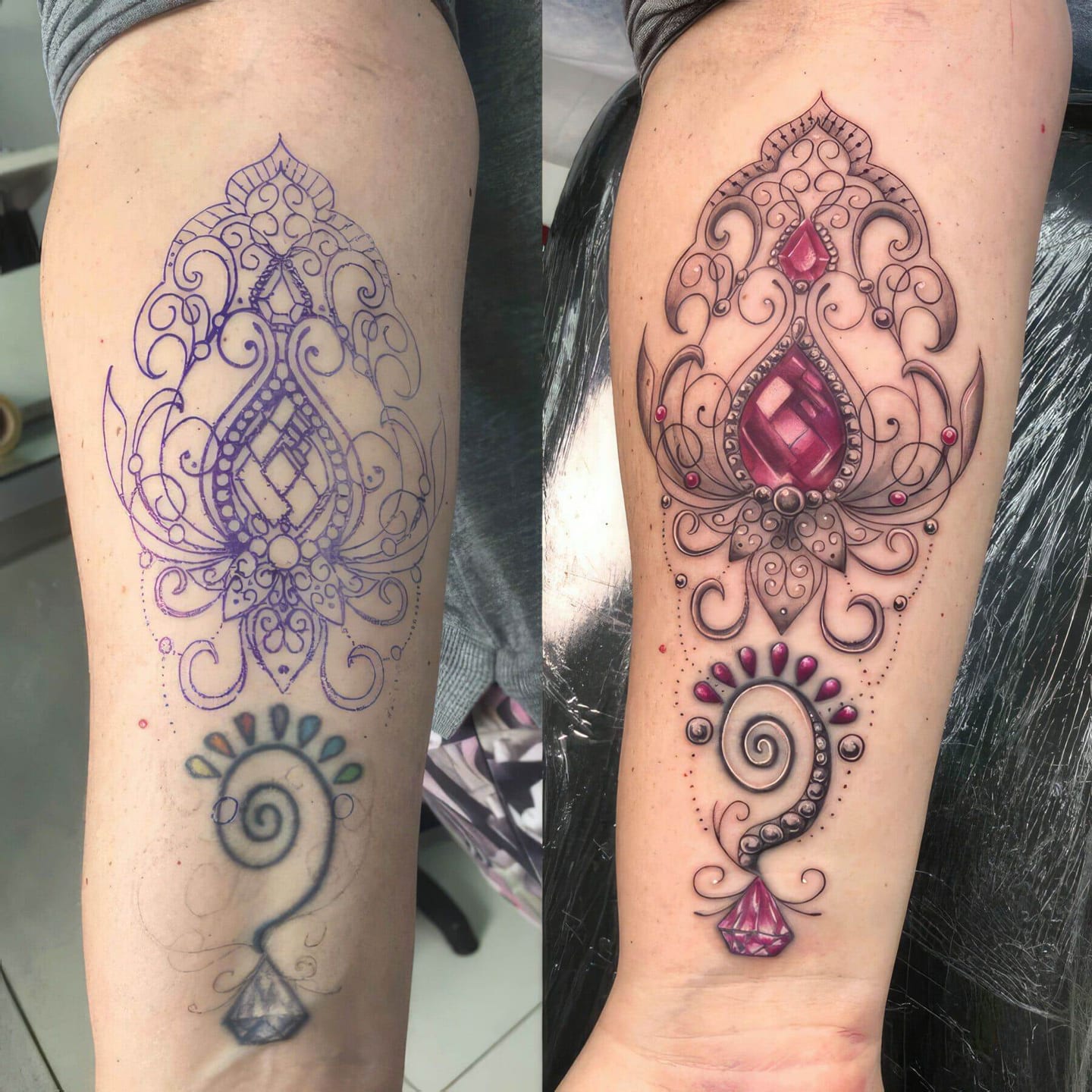
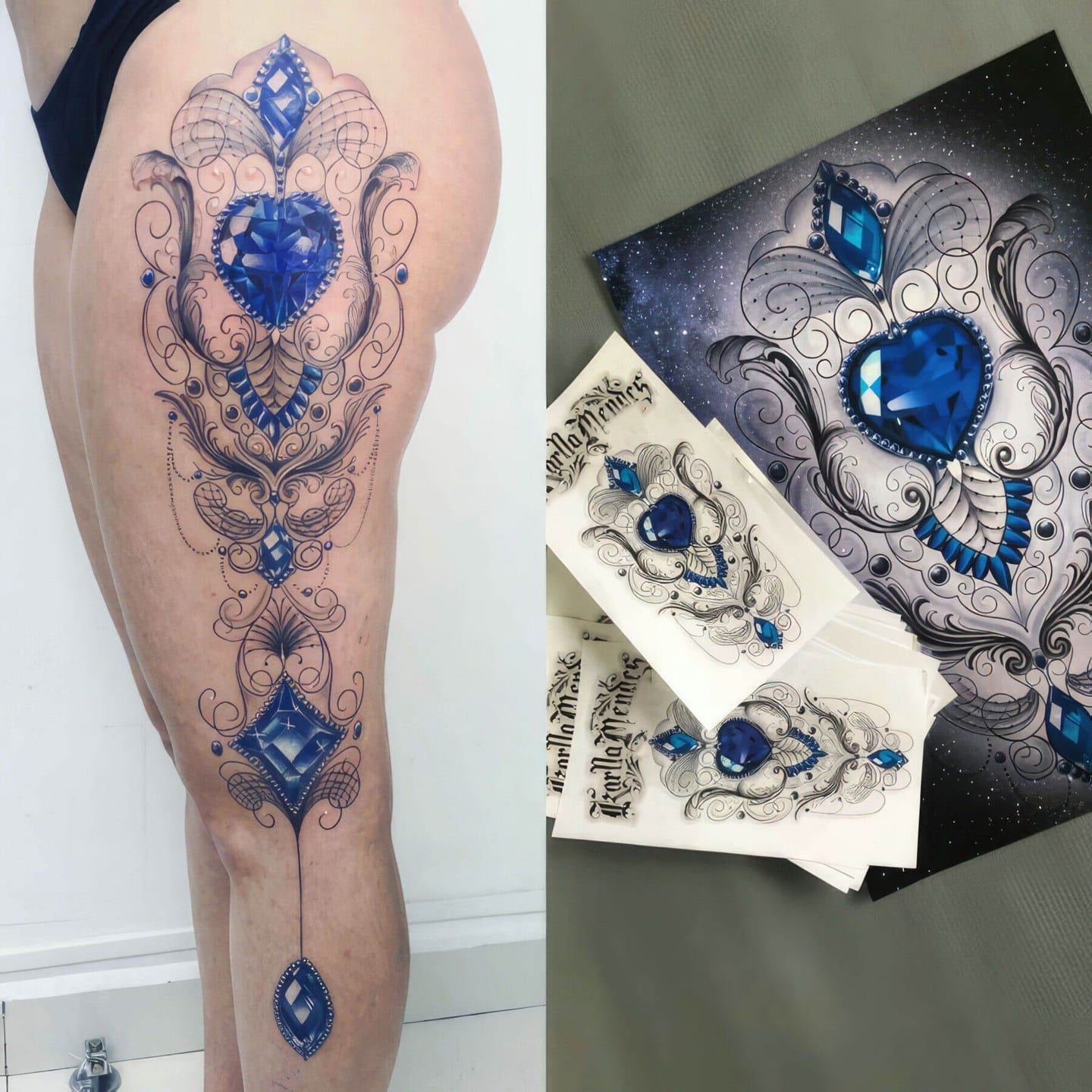
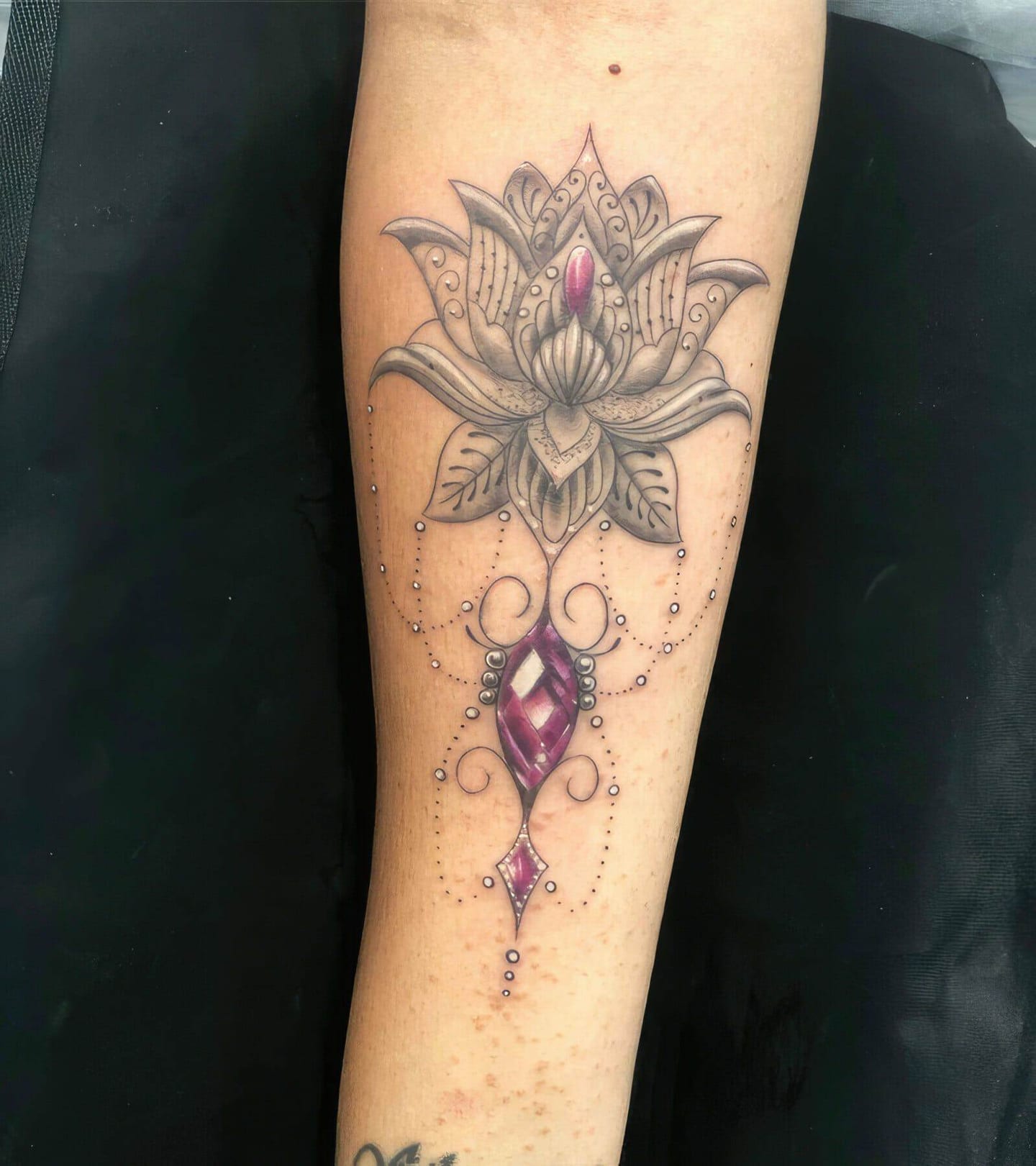
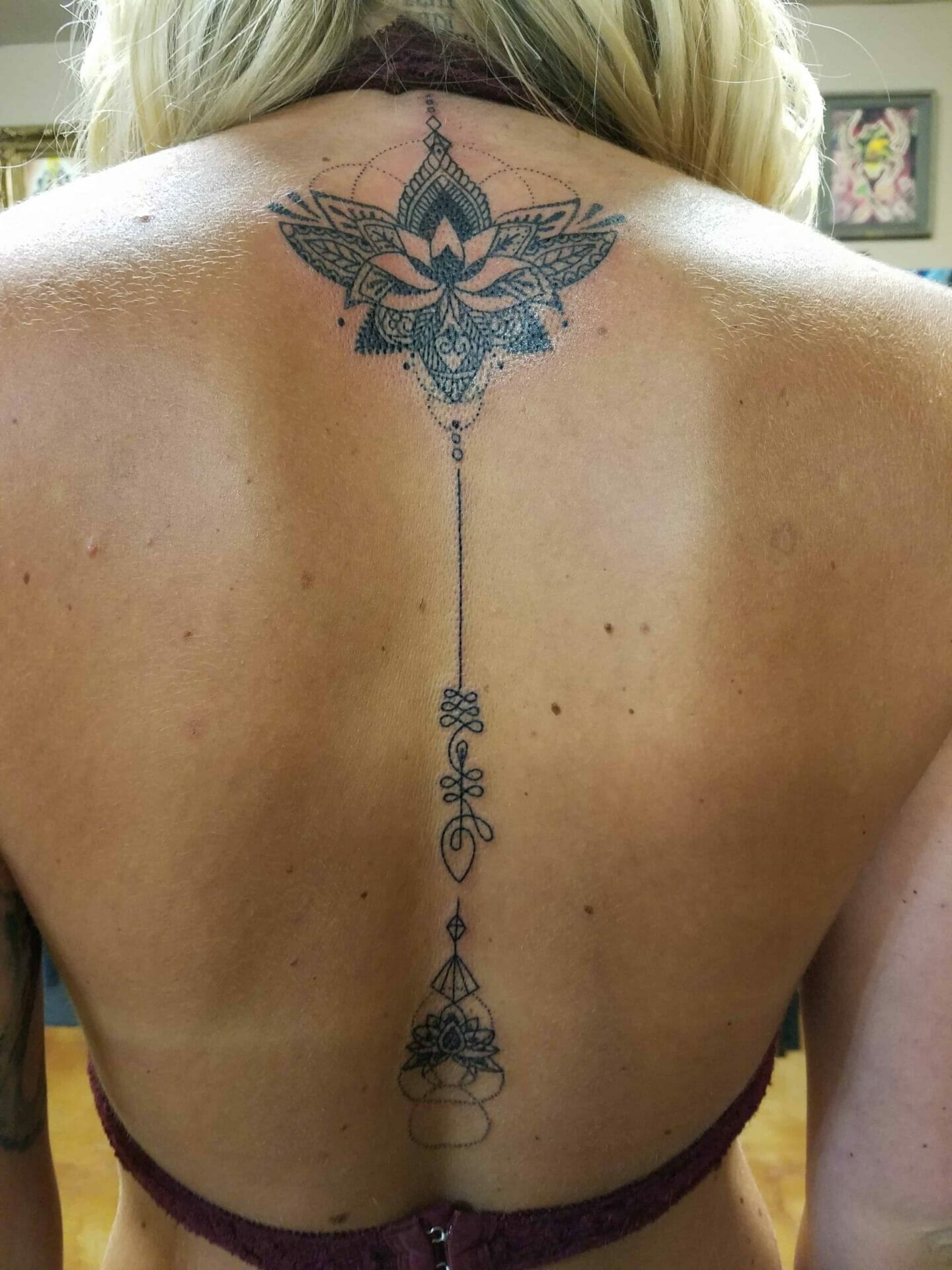
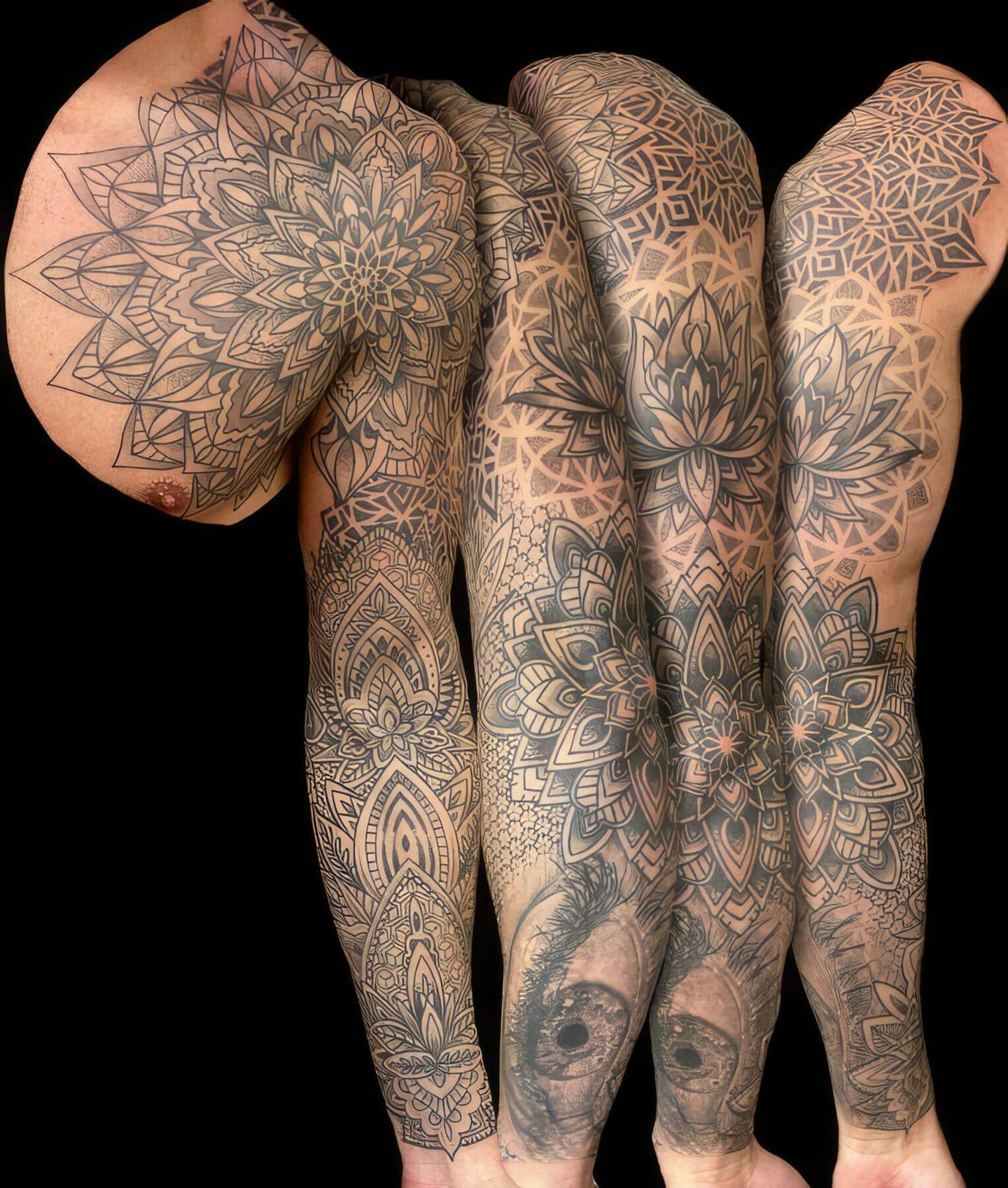
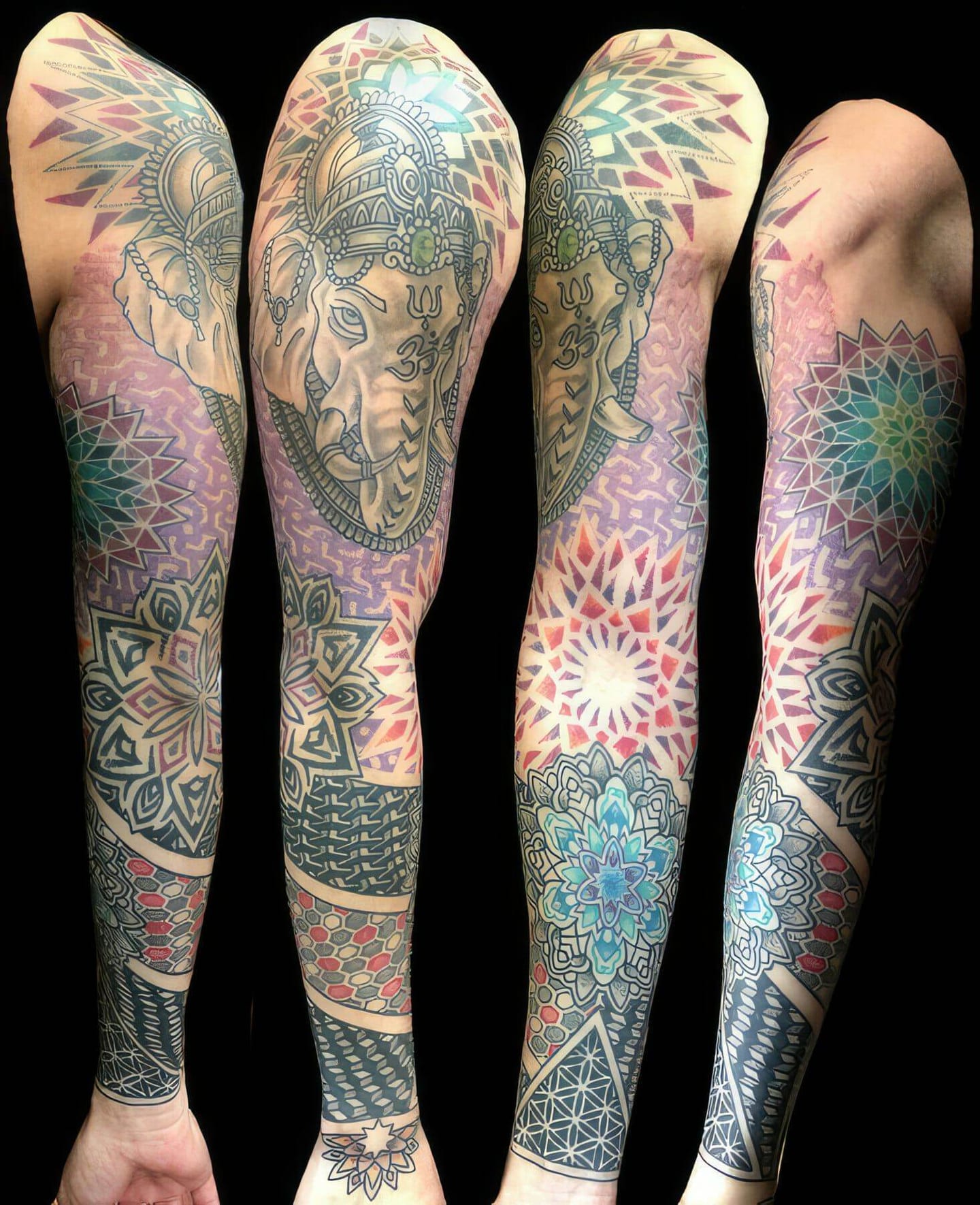
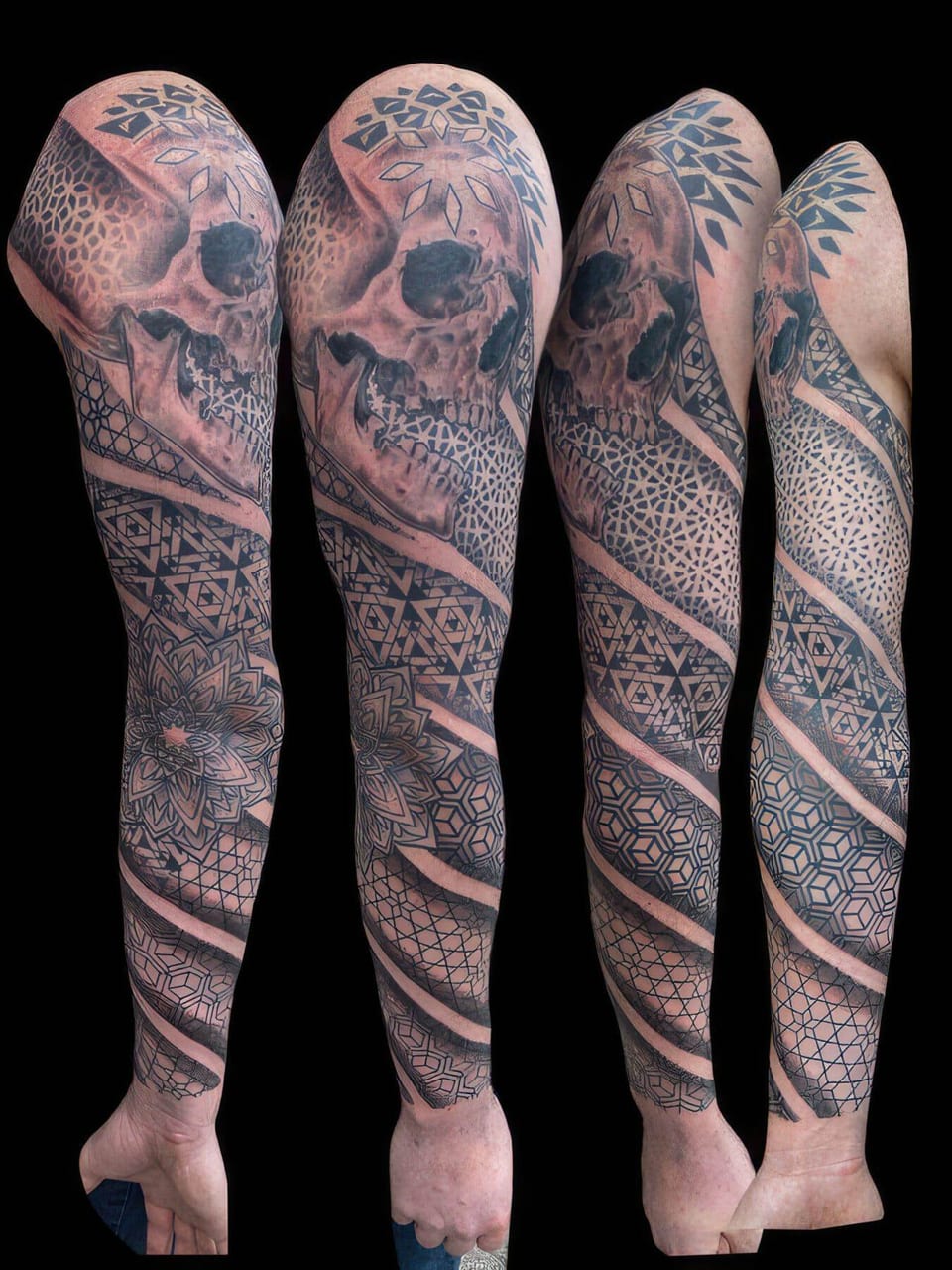
What to expect
Who to ask for geometric
Hunter Knolmayer
Biomechanical · Illustrative · Dot work
Measured, then stencilled, then checked again
Hunter carries geometric and mandala work here. Expect the layout to take time: centers are found, axes marked, the stencil placed and re-placed until the symmetry holds from every angle. Then the lines go on slowly.
Shading is usually dot work or solid black. Color accents are possible but rare, because the strength of the style is its contrast: black pattern, bare skin, and the symmetry doing the work that color does elsewhere.
At a glance
- Look
- Mandalas, sacred geometry, ornament
- Ink
- Black, often dot-shaded
- Placement
- Sternum, shoulder, forearm, knee, back
- Sessions
- One to several
- Artist
- Hunter
Questions people ask
Why can't you just use my printout?
Because skin curves and moves. A design made for a flat page distorts on a shoulder; the artist redraws it to the body so it looks symmetrical from where people actually see it.
Does the symmetry survive ageing?
Yes, when the lines are spaced and the blacks are solid. Fine, dense geometry is the exception; the artist will tell you where the limit is.
Can it wrap a joint?
Knees, elbows and wrists are possible with designs made for them. They take more sessions and heal more slowly.