
Biomechanical and organic
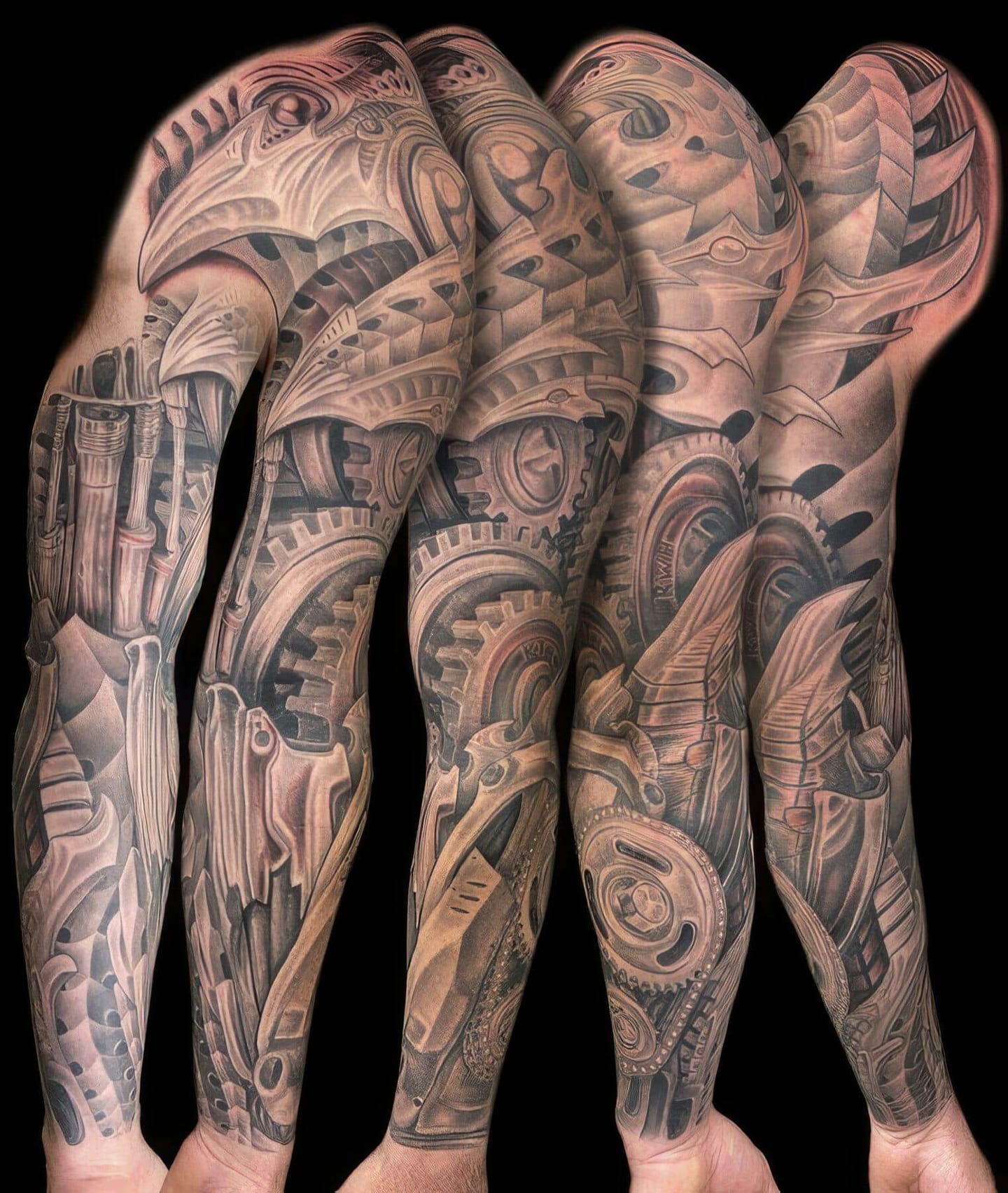
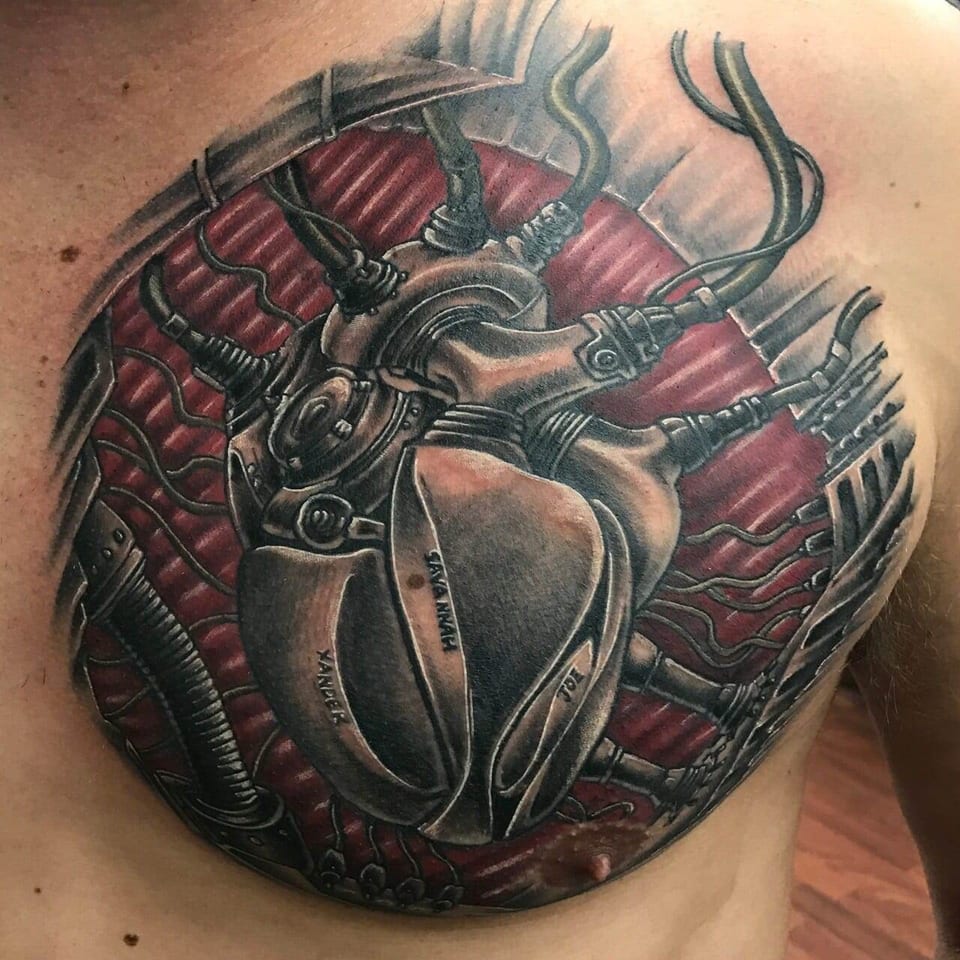
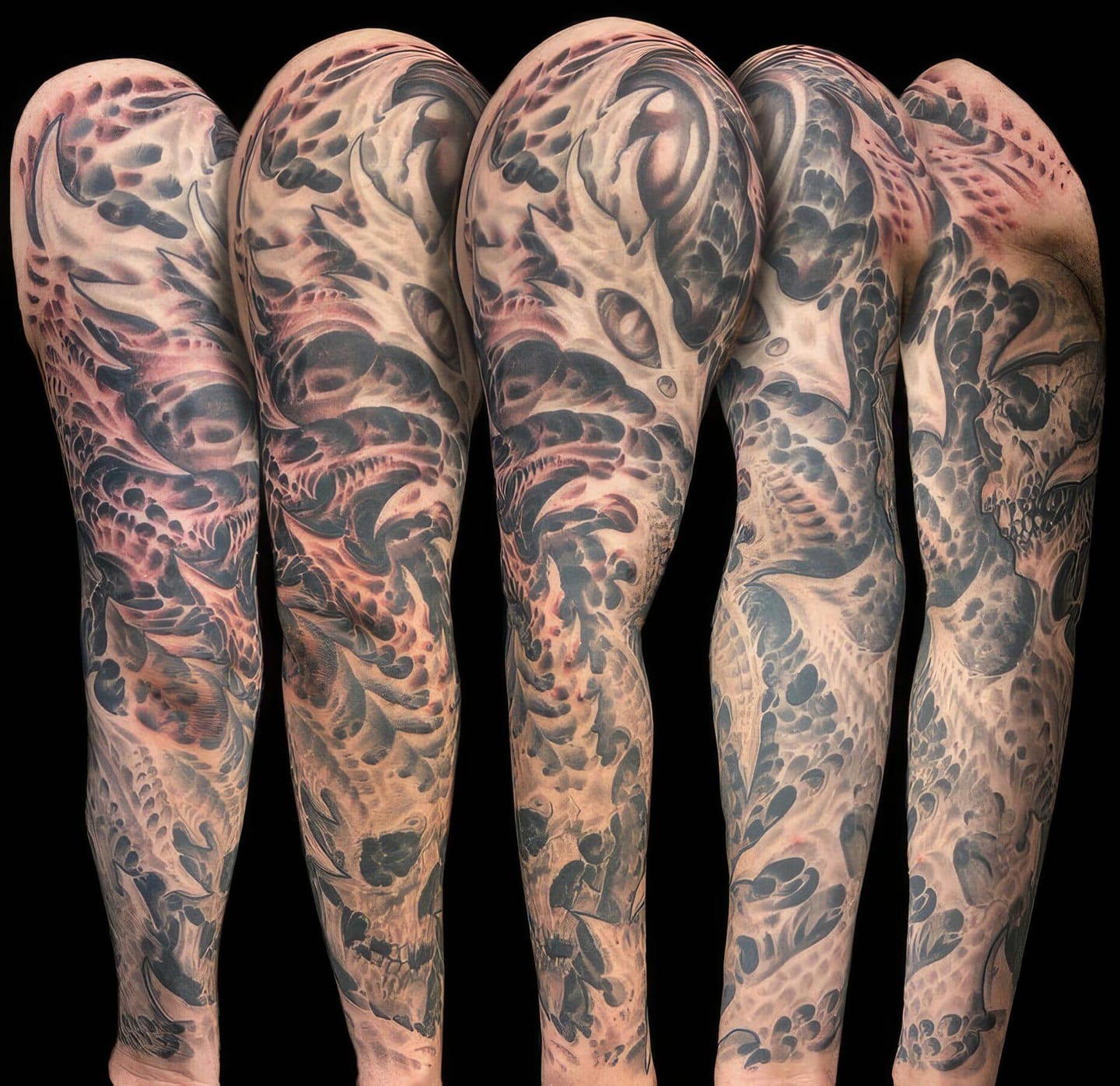
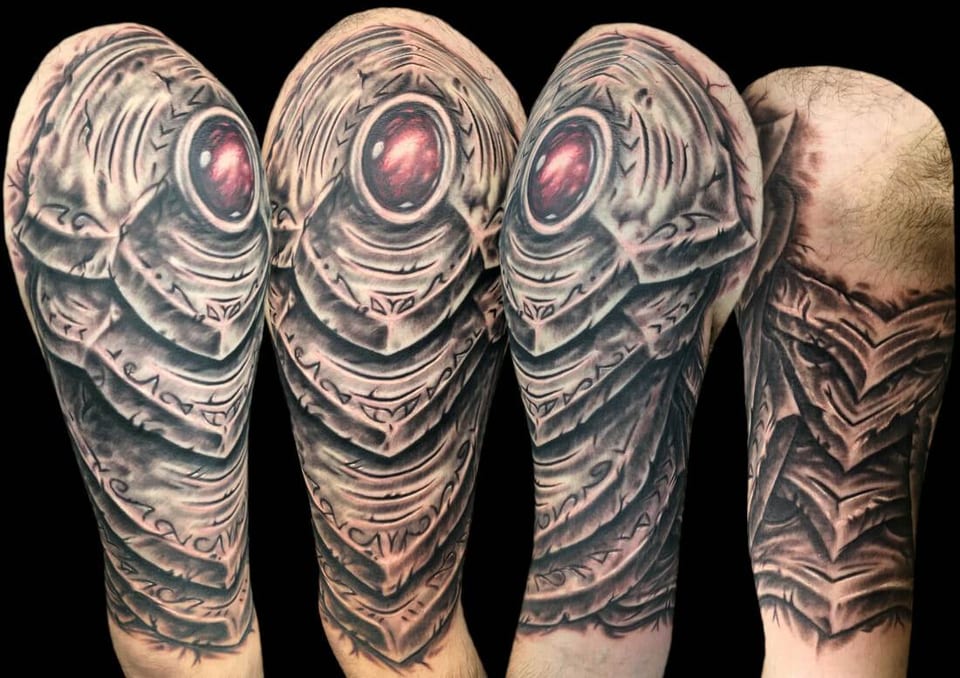
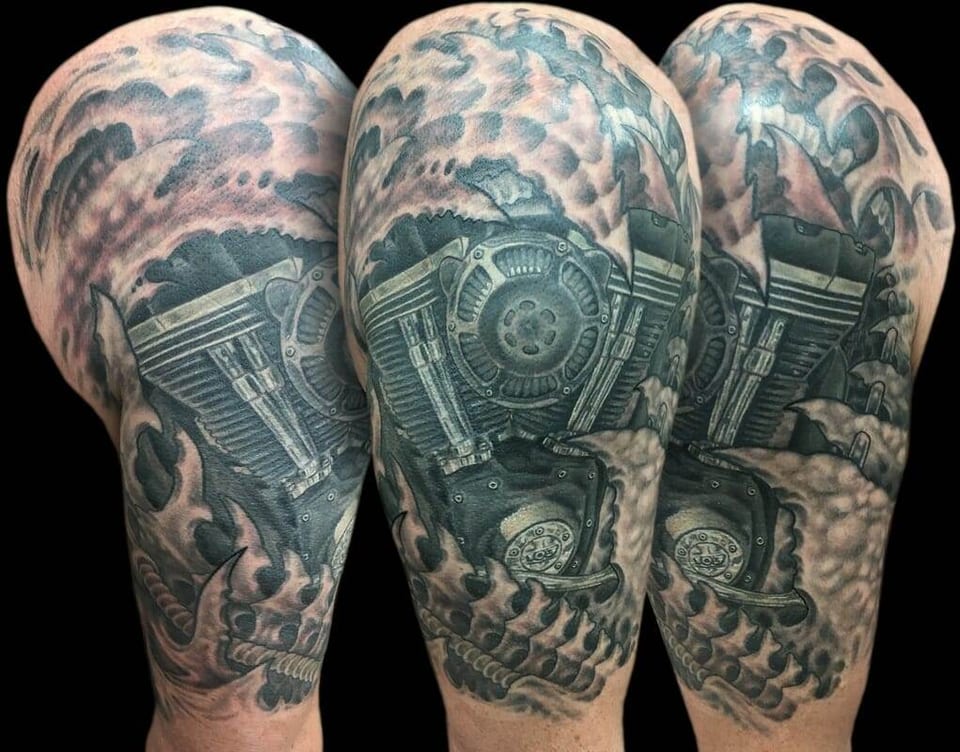
Machinery and living tissue under the skin: pistons, cables, bone and sinew that follow the muscle so the arm looks built rather than decorated.

The style
Built to the anatomy
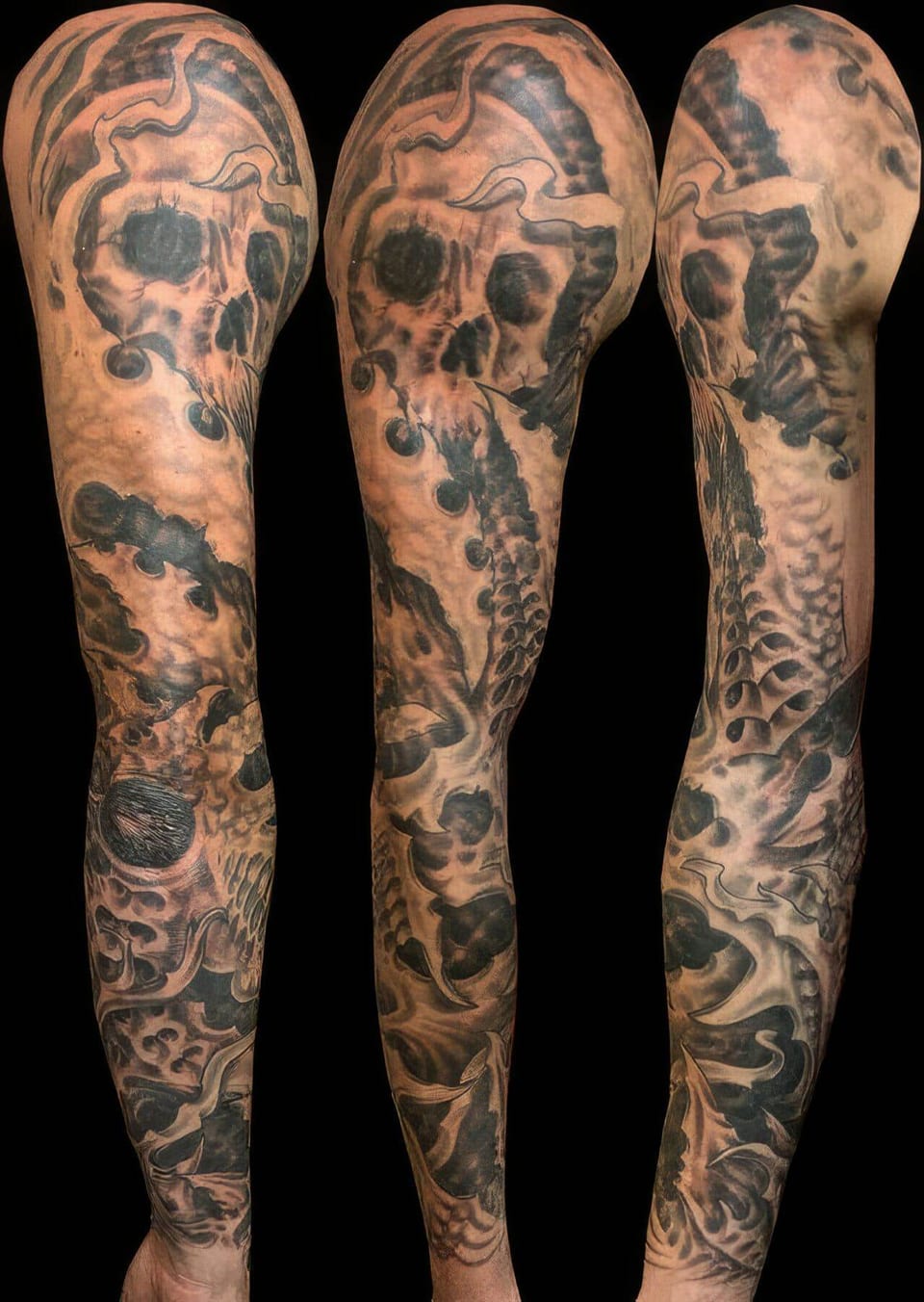
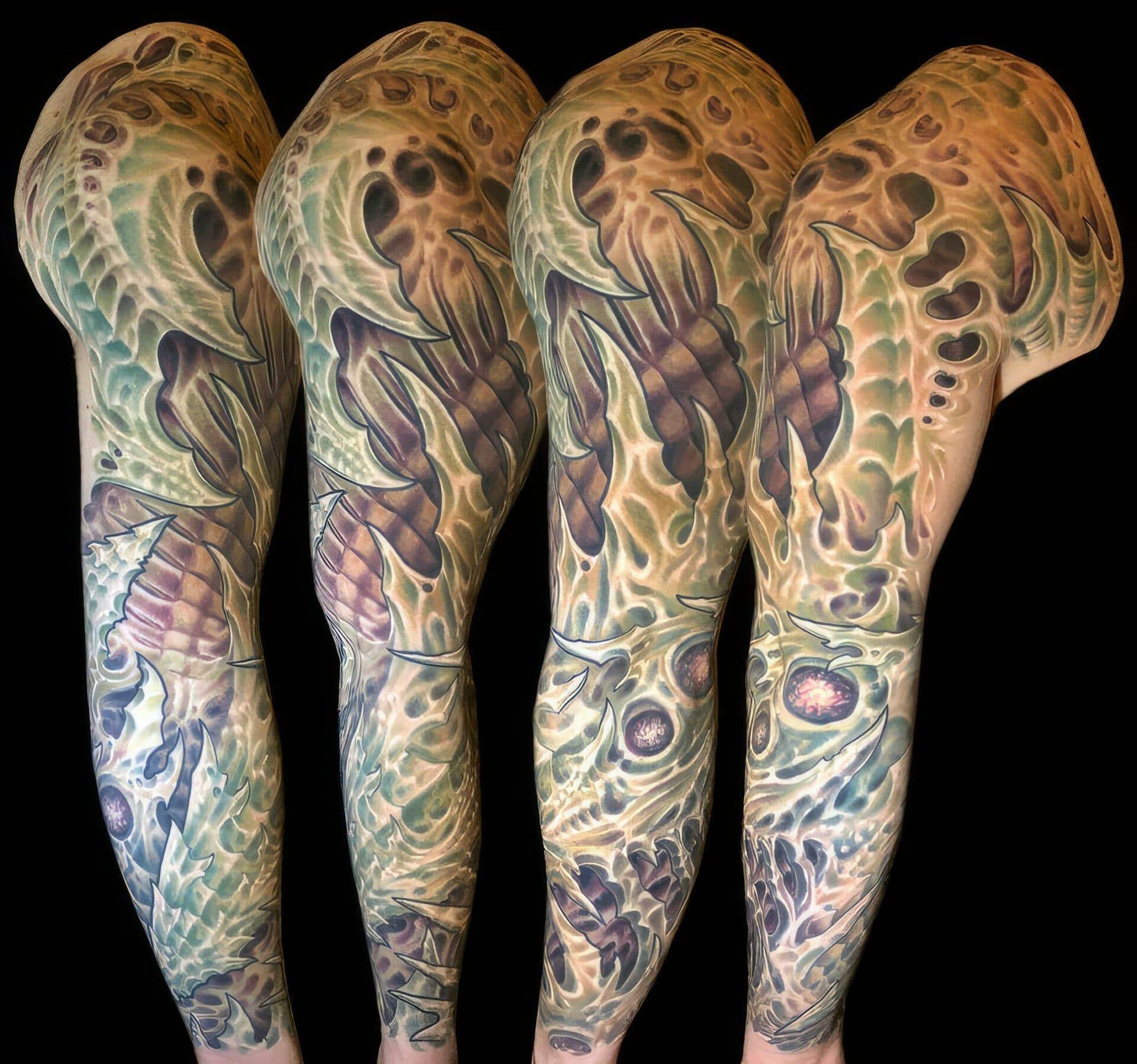
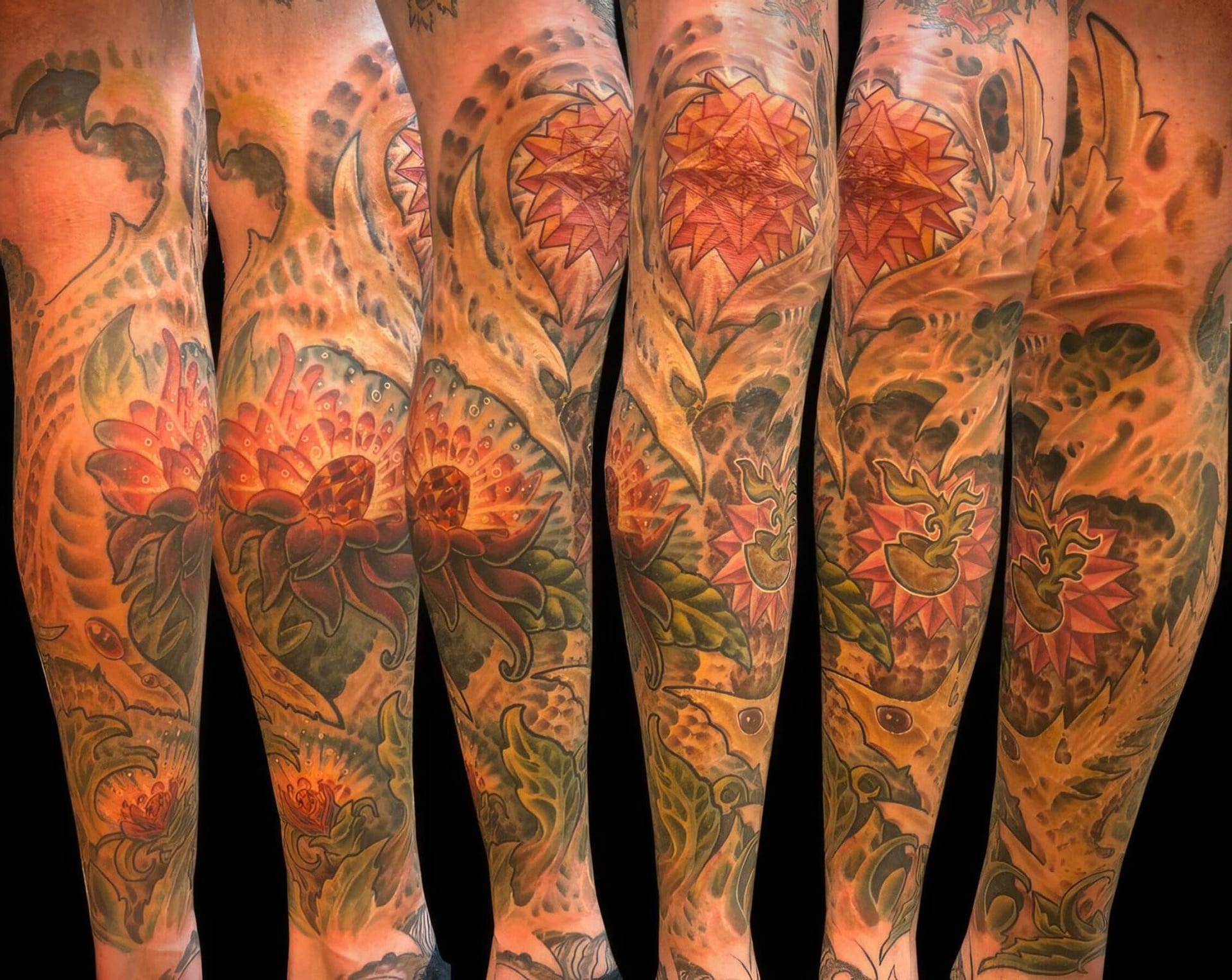
Biomechanical work shows what might be under the skin if you were part machine: torn flesh revealing pistons, cables and plates. Bio-organic takes the same idea into living forms, tendon, bone, shell and growth, often without a single straight line.
Both only work when they follow the body. The design is drawn on the limb so every shape moves with the muscle underneath, which is why this is custom work from the first sketch and why a photograph of the arm matters more than any reference picture.
Work
Biomechanical and organic work from the shops
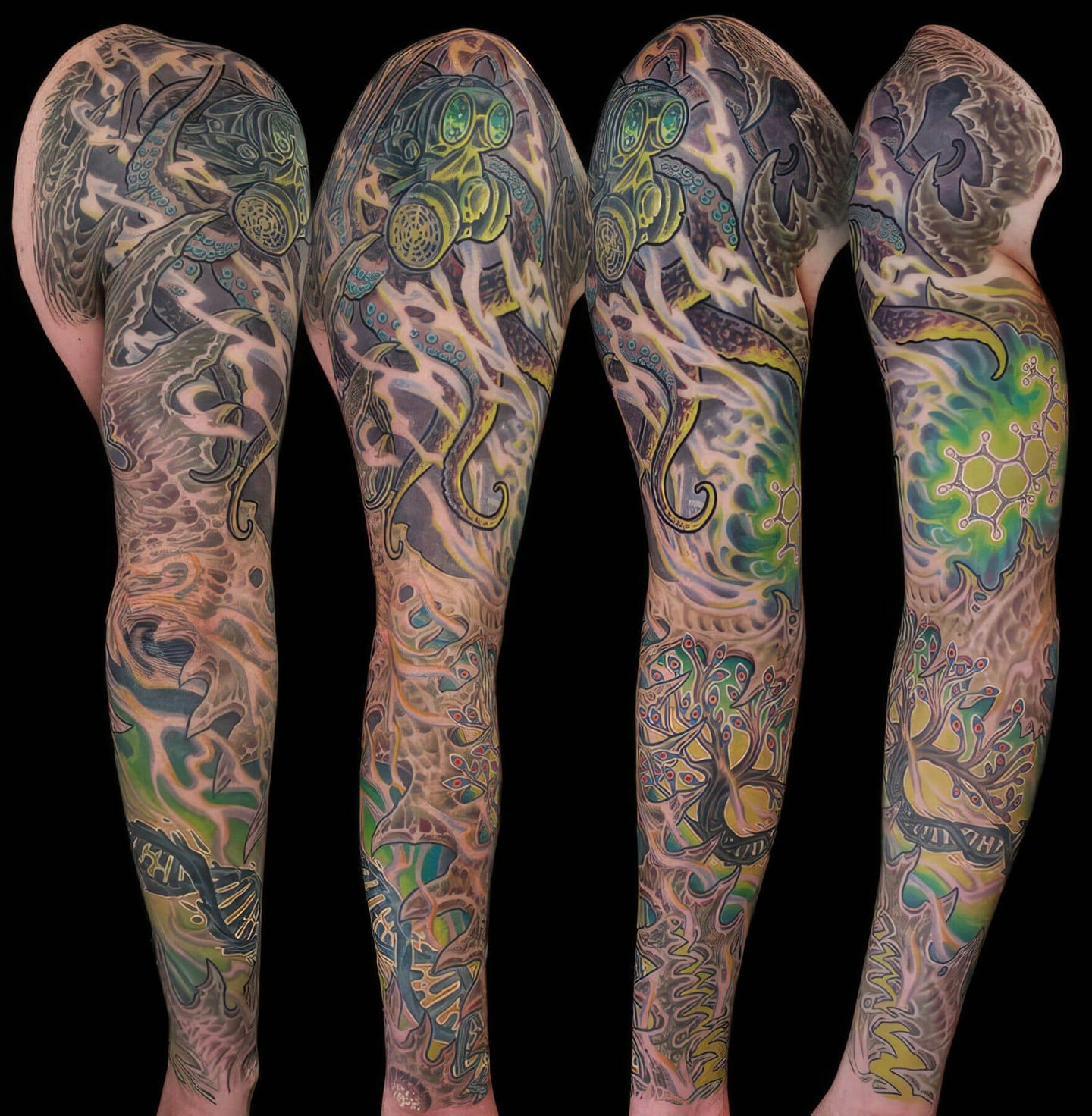
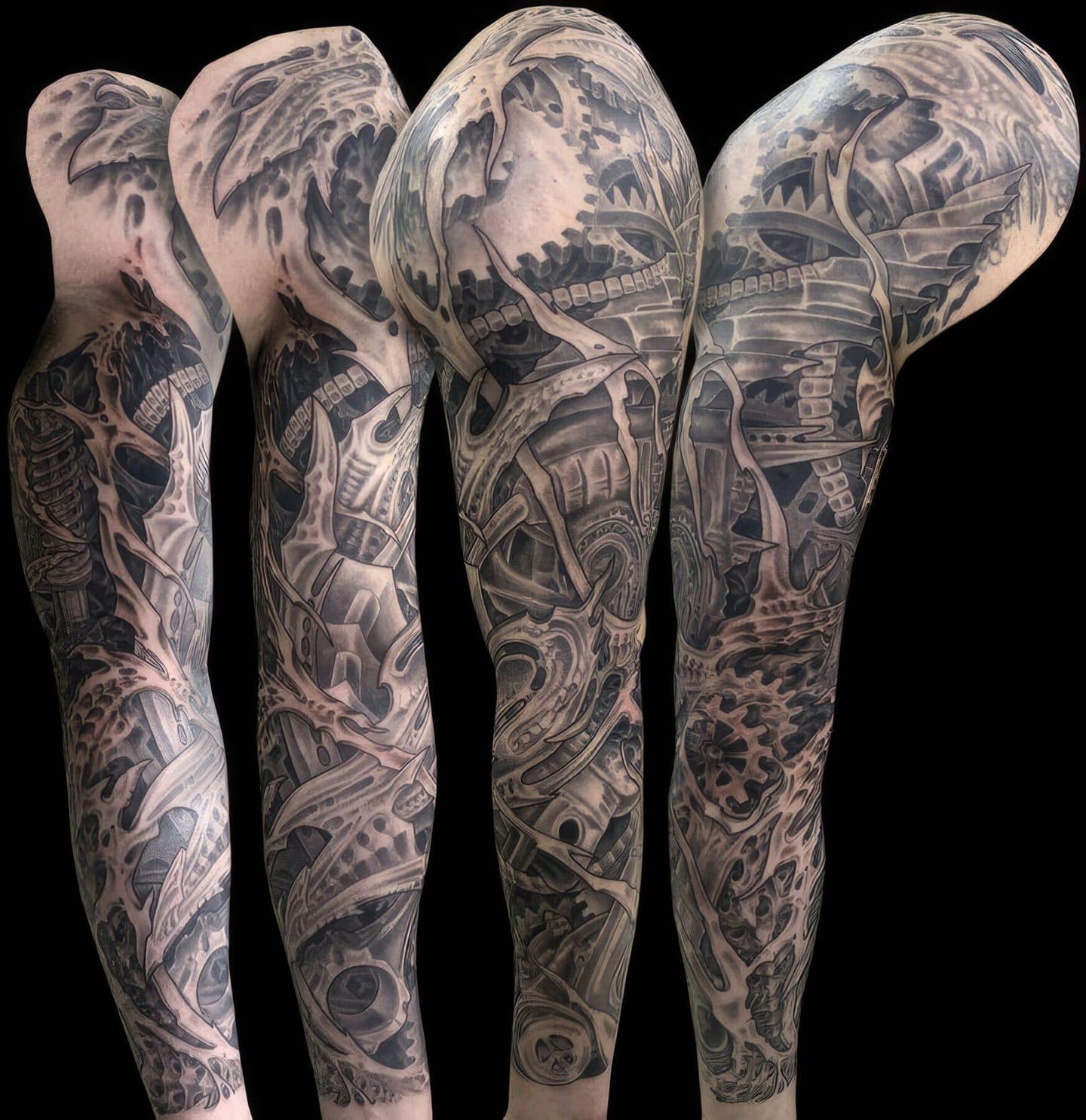
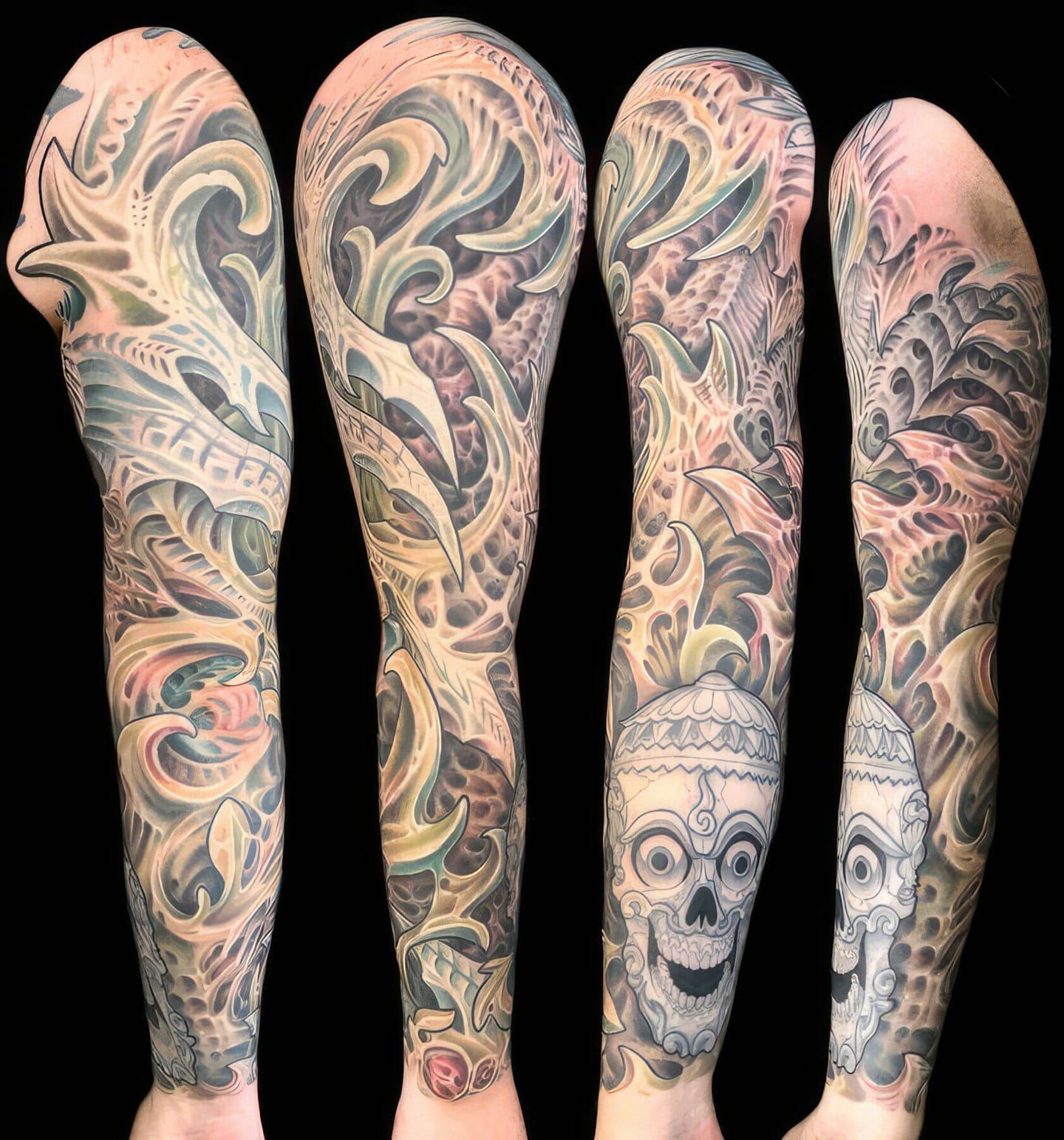
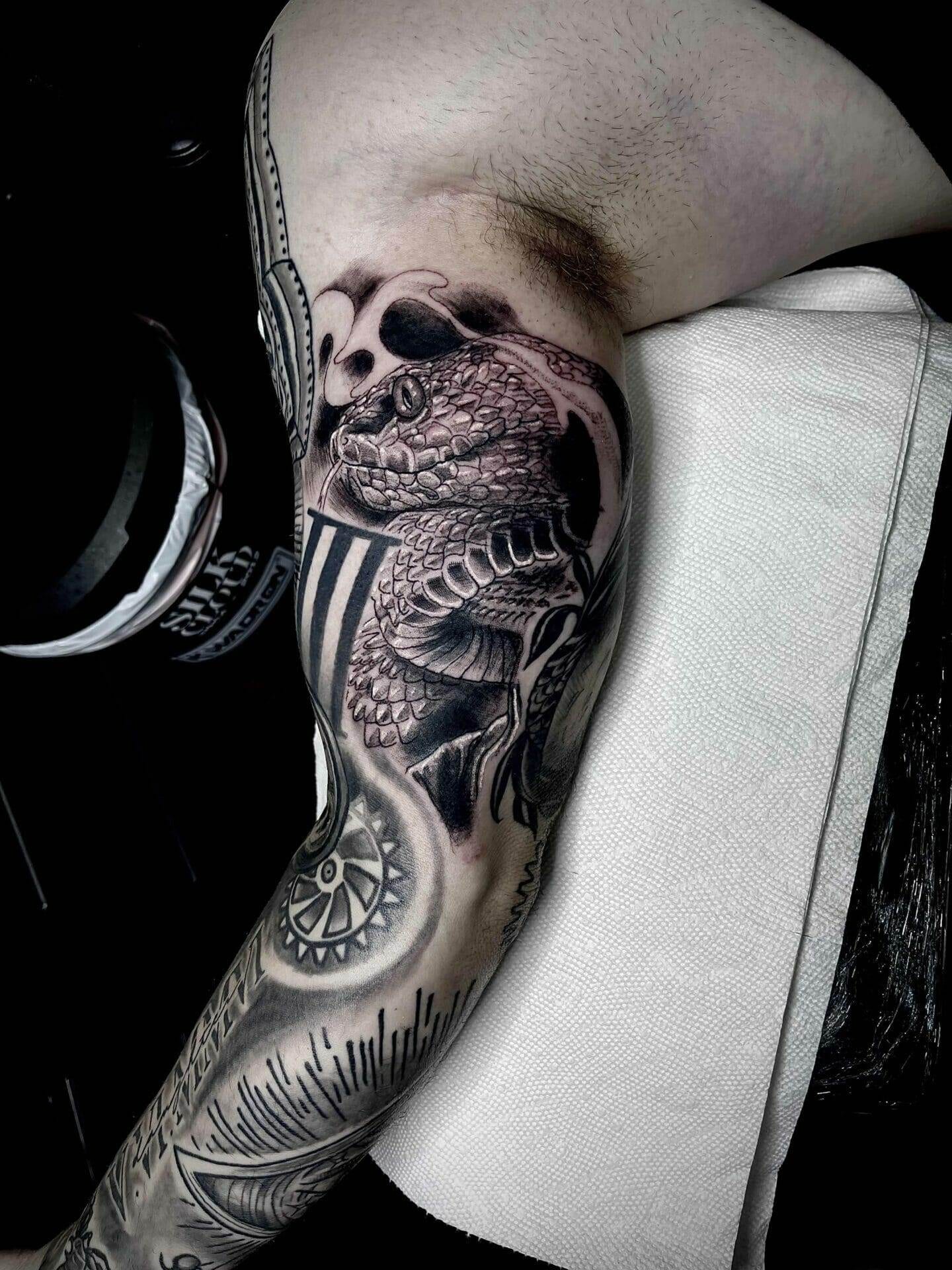
What to expect
Who to ask for biomechanical
Hunter Knolmayer
Illustrative · Geometric · Dot work
Freehand layout, several sessions
The artist marks the flow lines on your arm or leg first, then builds the forms inside them. Pieces are usually large, forearm and up, and take several sessions; the depth comes from layers of black and grey, sometimes with a single color for glow or liquid.
Hunter carries this style here. Send him the body part, a photo of it, and the feeling you want, mechanical or organic, and he designs from there. Expect a consultation that is mostly about where the flow lines go and how far the piece will extend.
At a glance
- Design
- Custom, drawn on the body
- Size
- Forearm and up
- Ink
- Black and grey, optional color accent
- Sessions
- Several
- Artist
- Hunter
Questions people ask
Can it wrap around an existing tattoo?
Often, yes. Biomechanical and organic forms are good at flowing around and incorporating older work. Bring a photo of what is there.
Is it painful because of the shading?
The long smooth shading passes are steady rather than sharp. Sessions are planned to your tolerance, and numbing is available.
How does it age?
Well, when the contrast is kept strong. Soft gradients are refreshed at a touch-up years later if they soften.