Black and grey
Black ink and water, nothing else: from soft photographic shading to hard-edged fine line, the style most of our artists call home.

The style
Everything you can do with one color
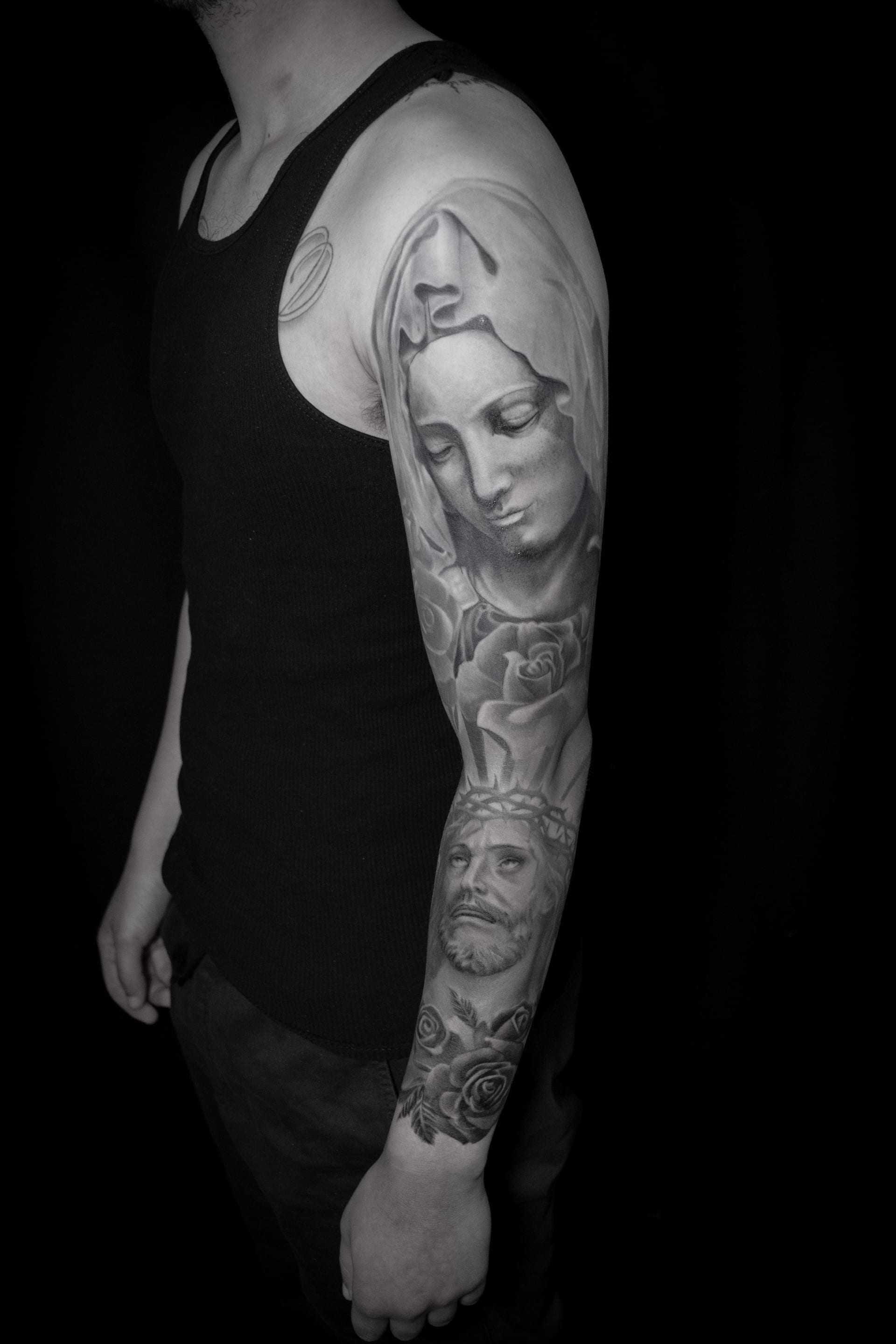
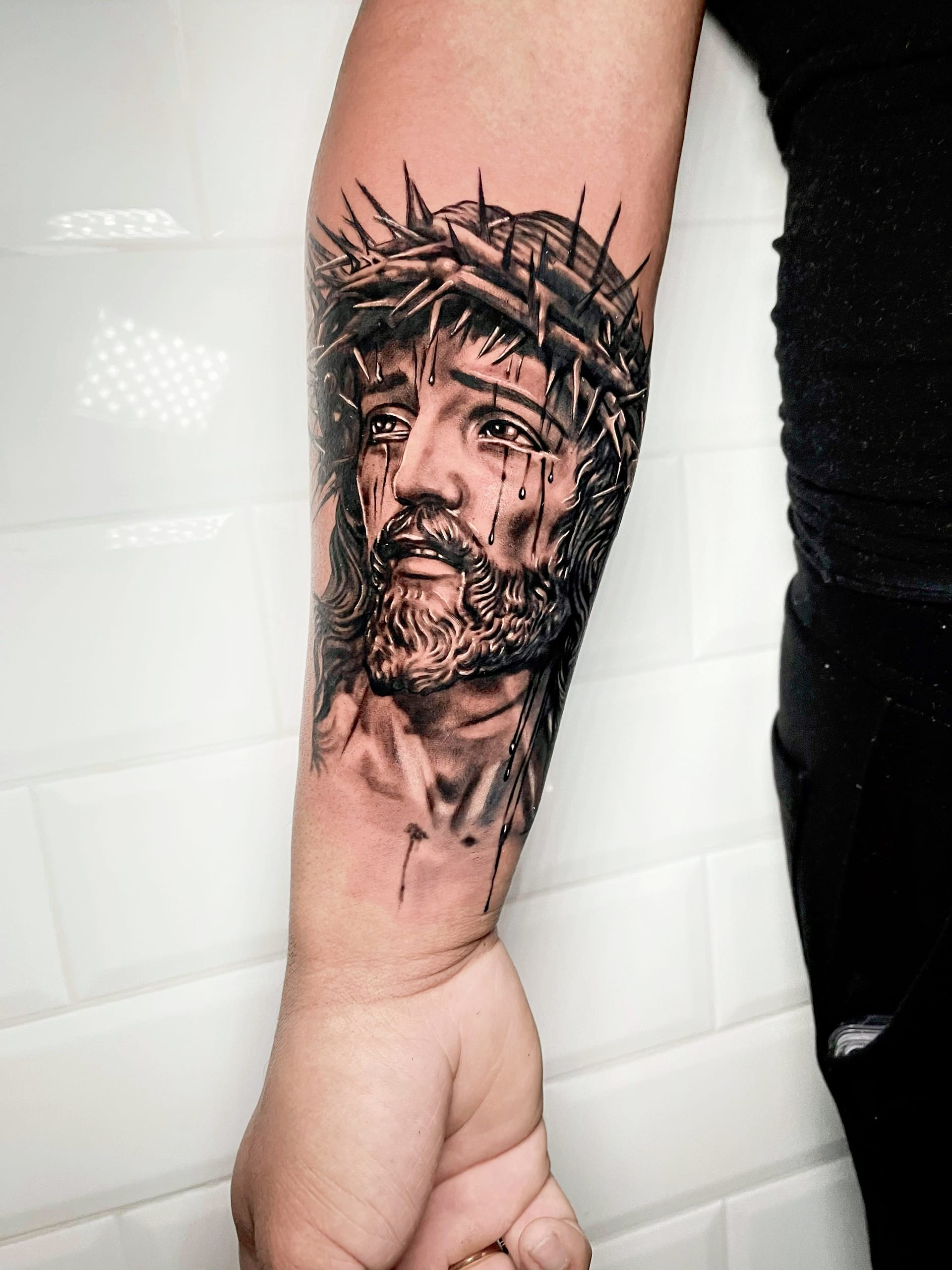
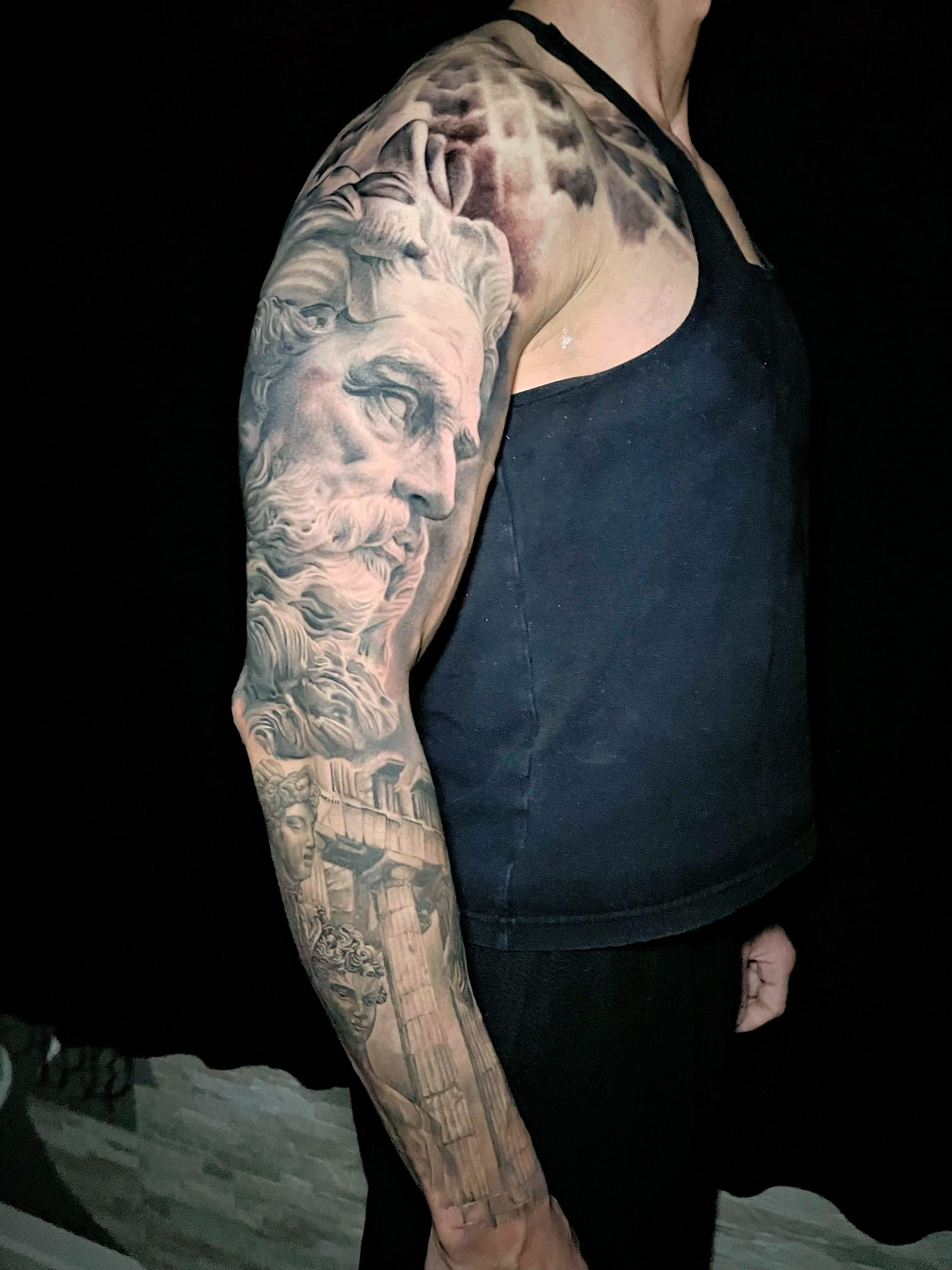
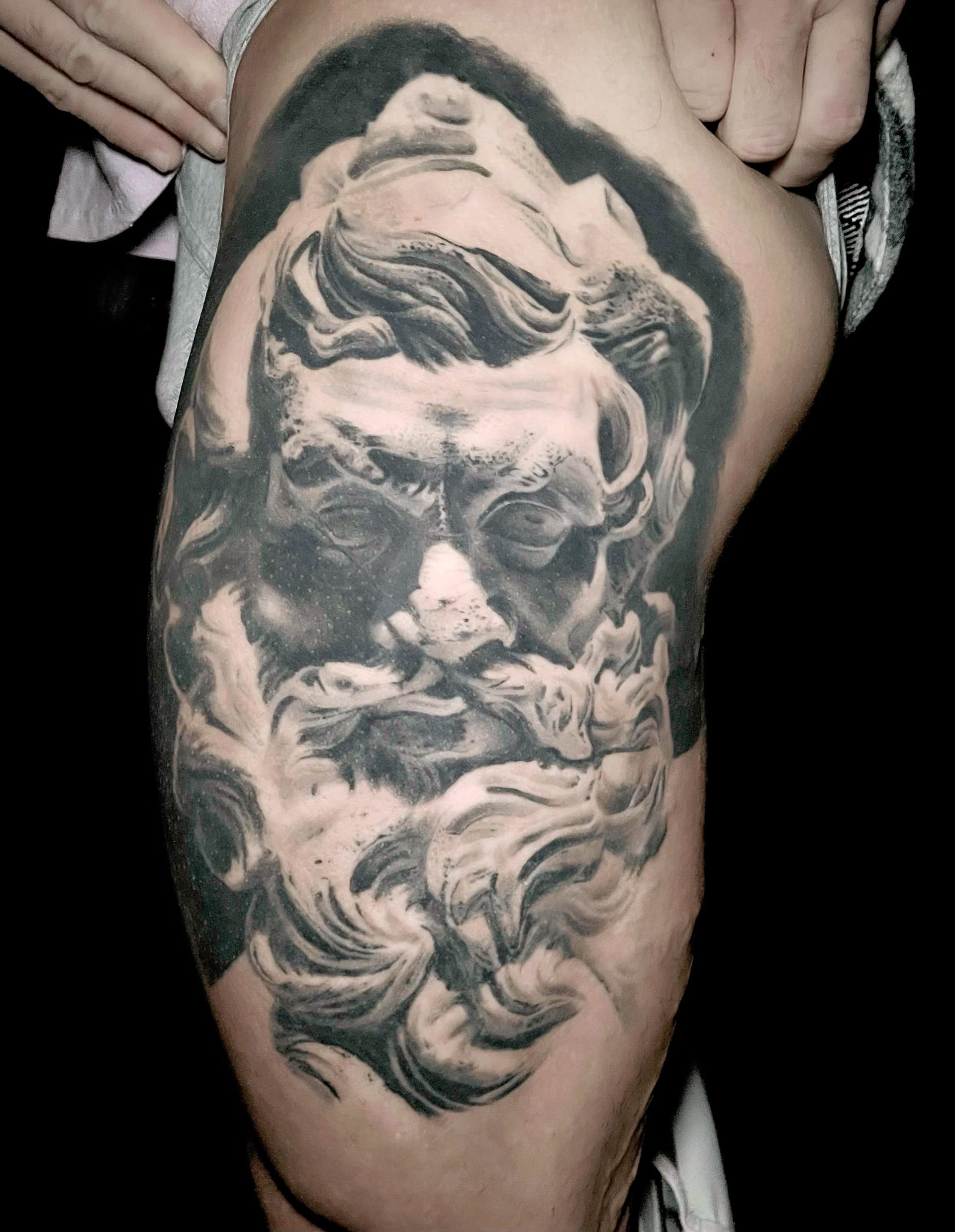
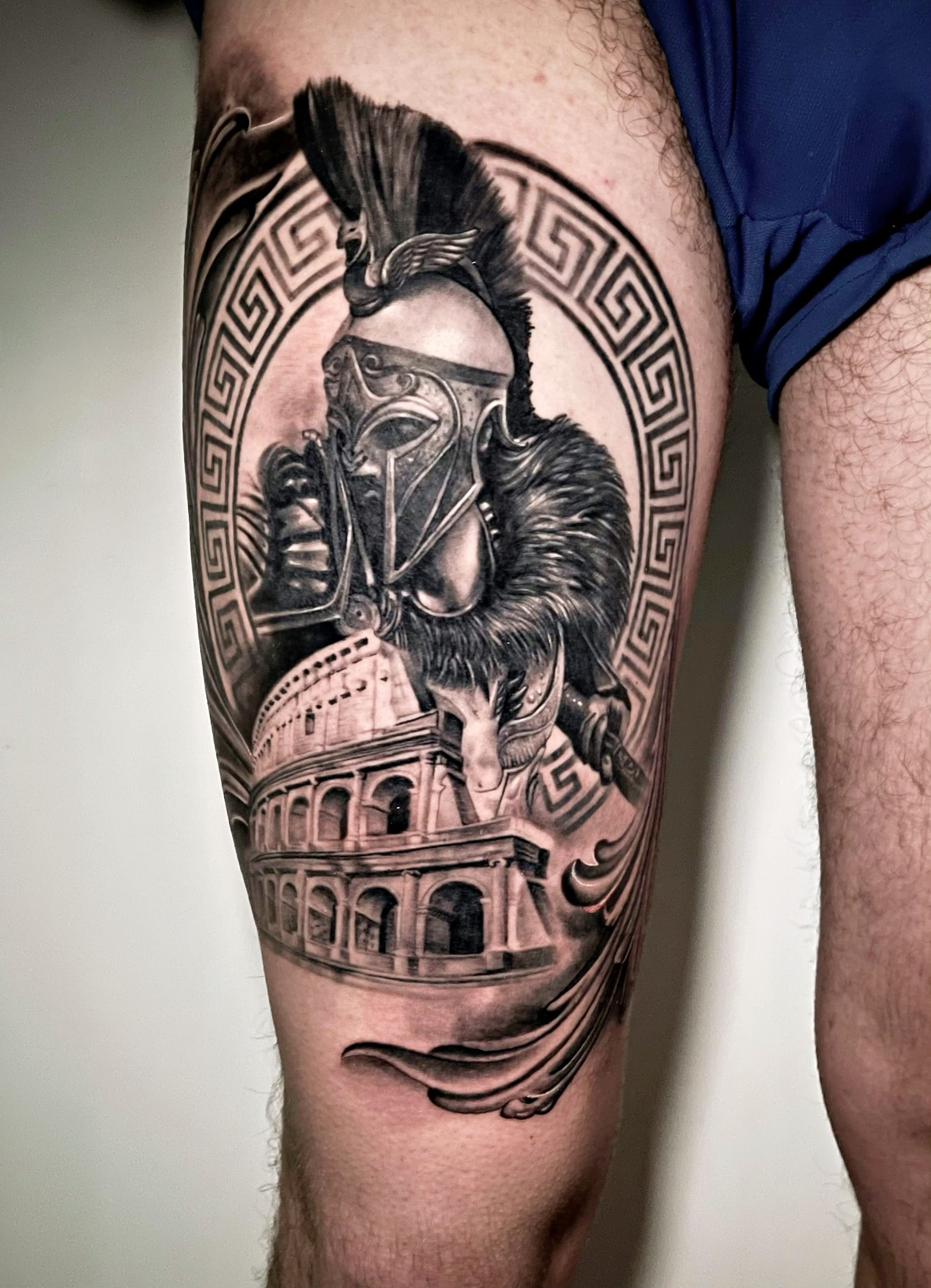
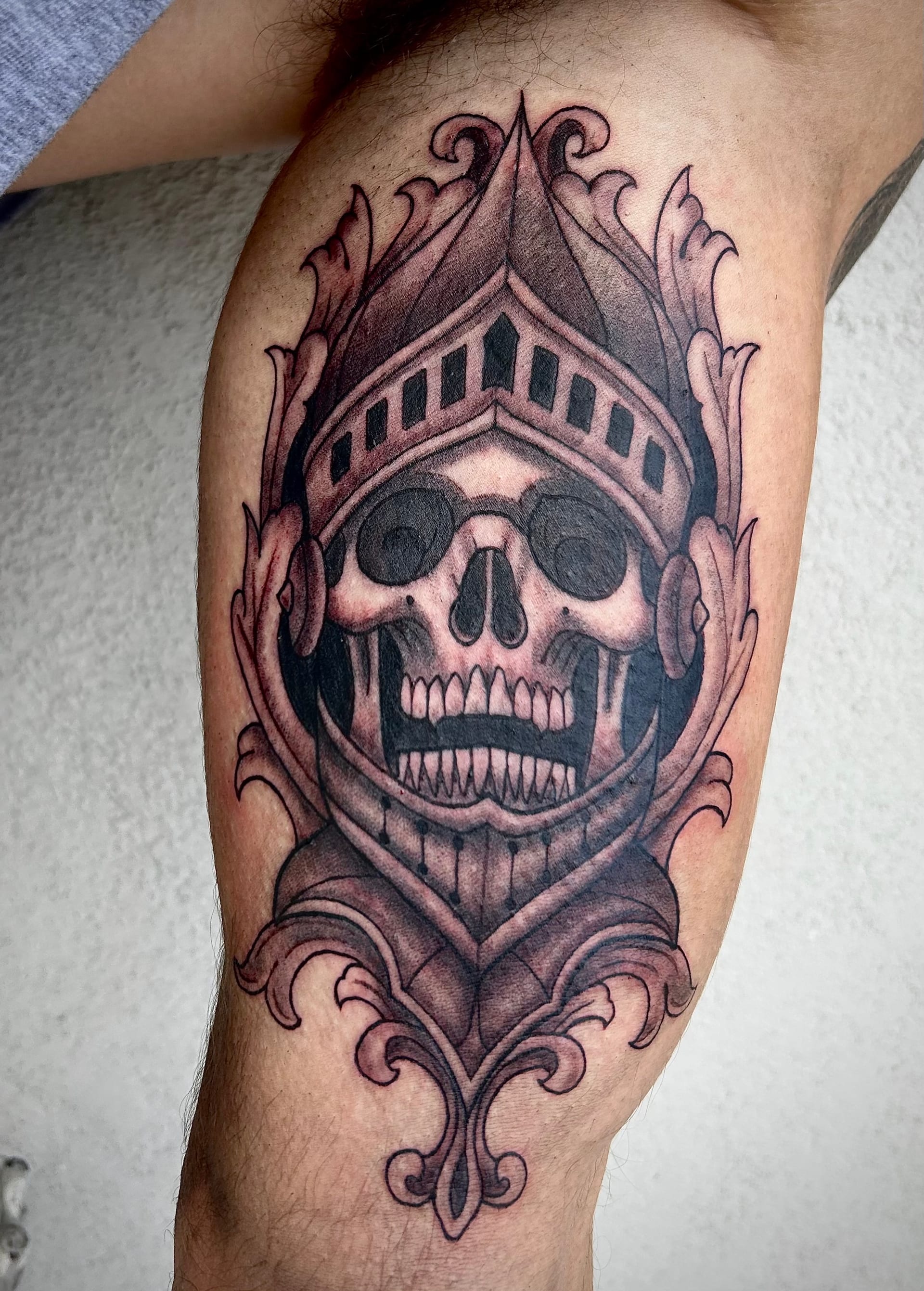
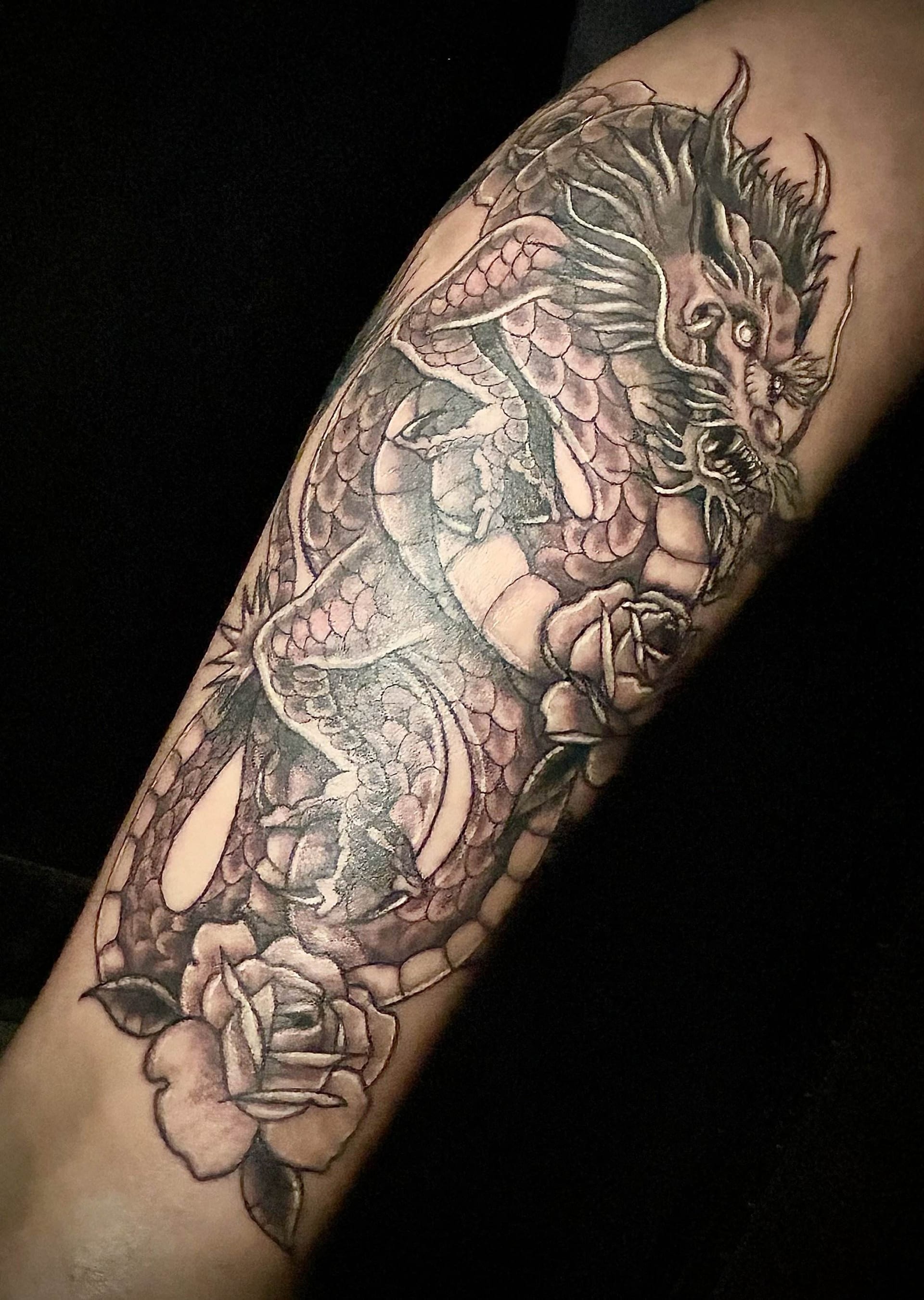
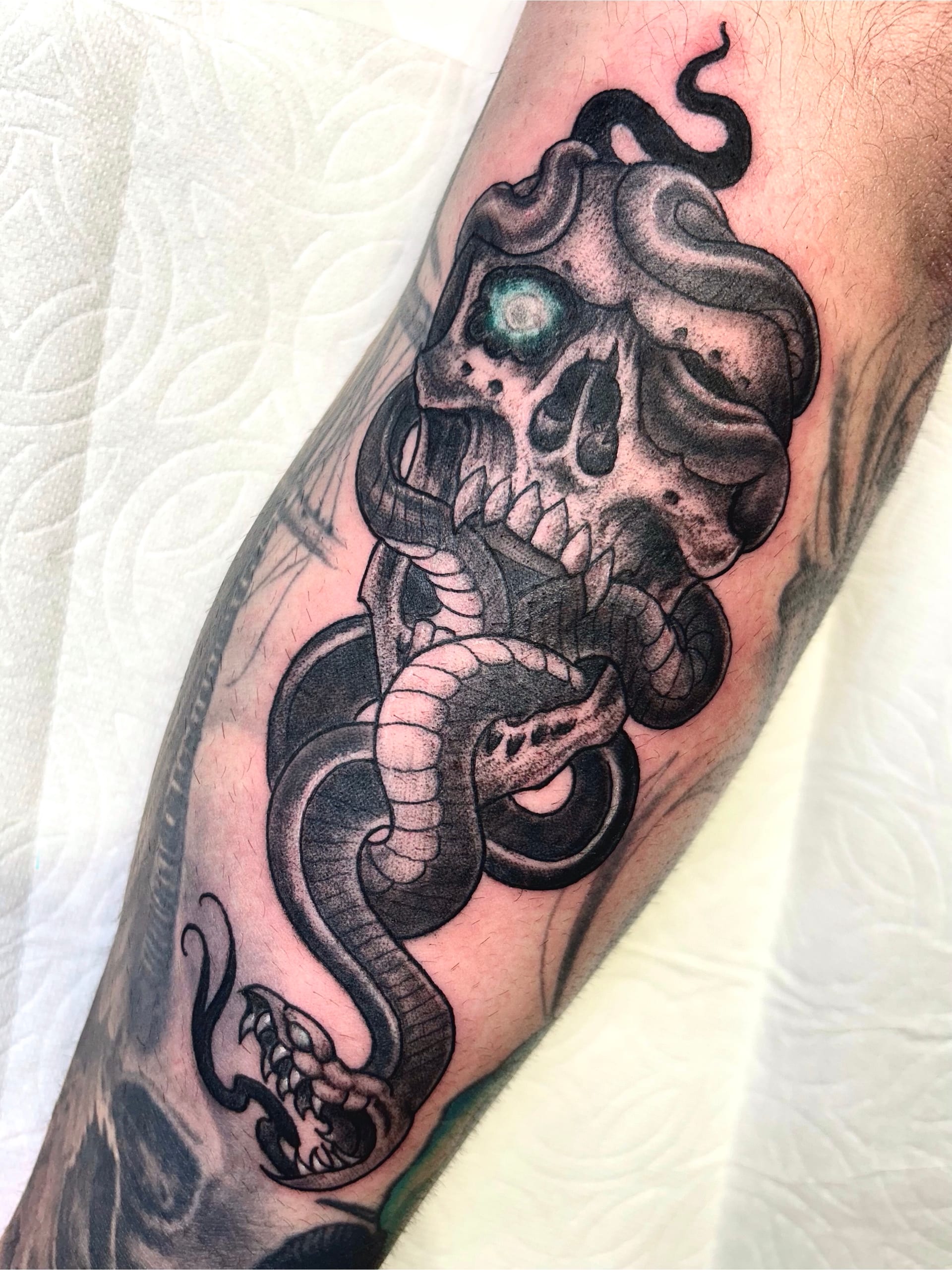
Black and grey is black ink diluted into washes, from near-white to solid. It covers photographic realism, religious and chicano work, portraits, lettering, florals and fine line. What they share is contrast: the blacks have to be black for the greys to read.
It is the style with the most range at the shops, and the one most of our artists started in: a portrait, a prayer, a lettering piece and a fine line sprig can all be black and grey and sit together on one arm, which makes it the easiest style to build a sleeve around.
Work
Black and grey work from the shops
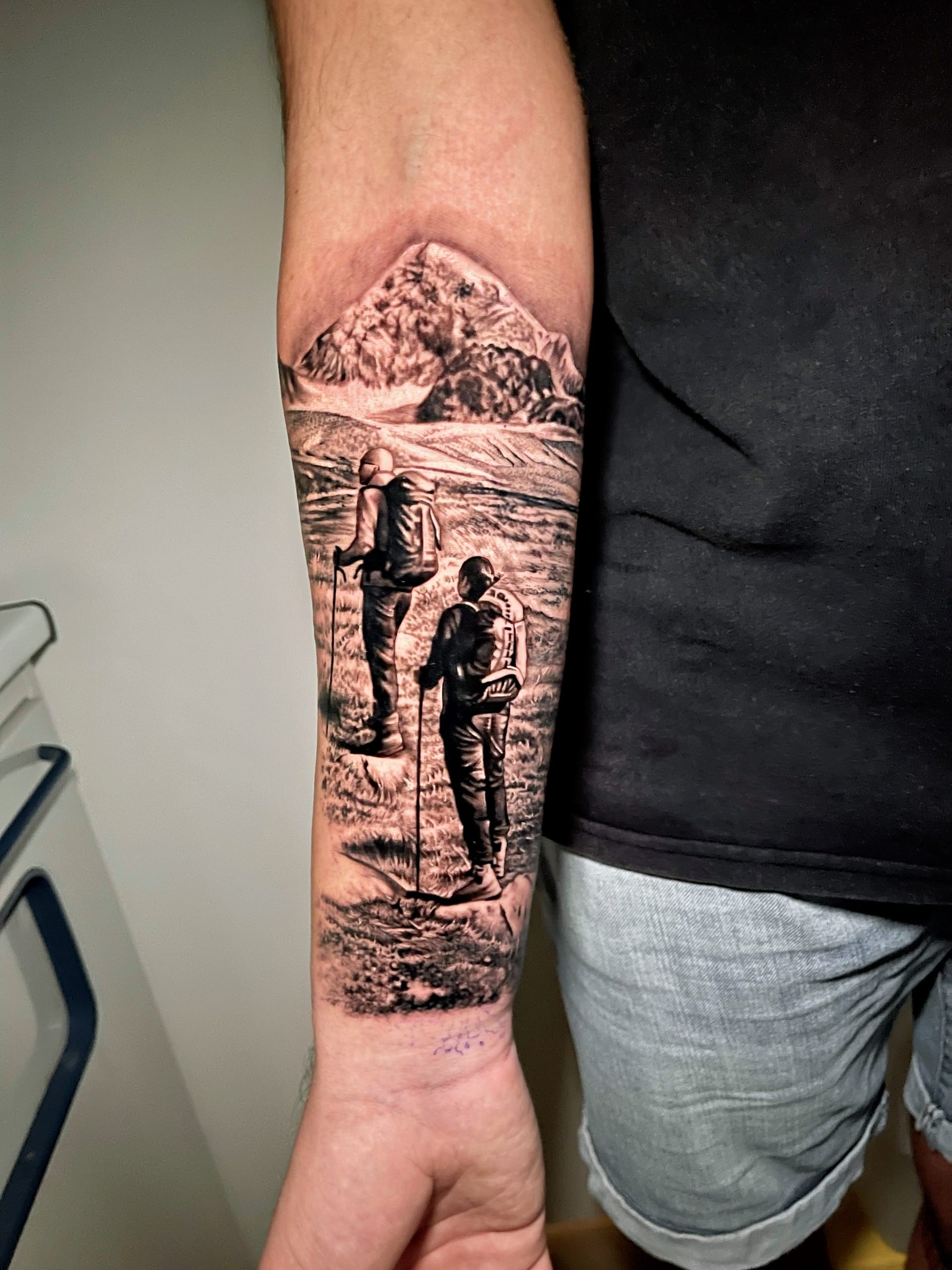
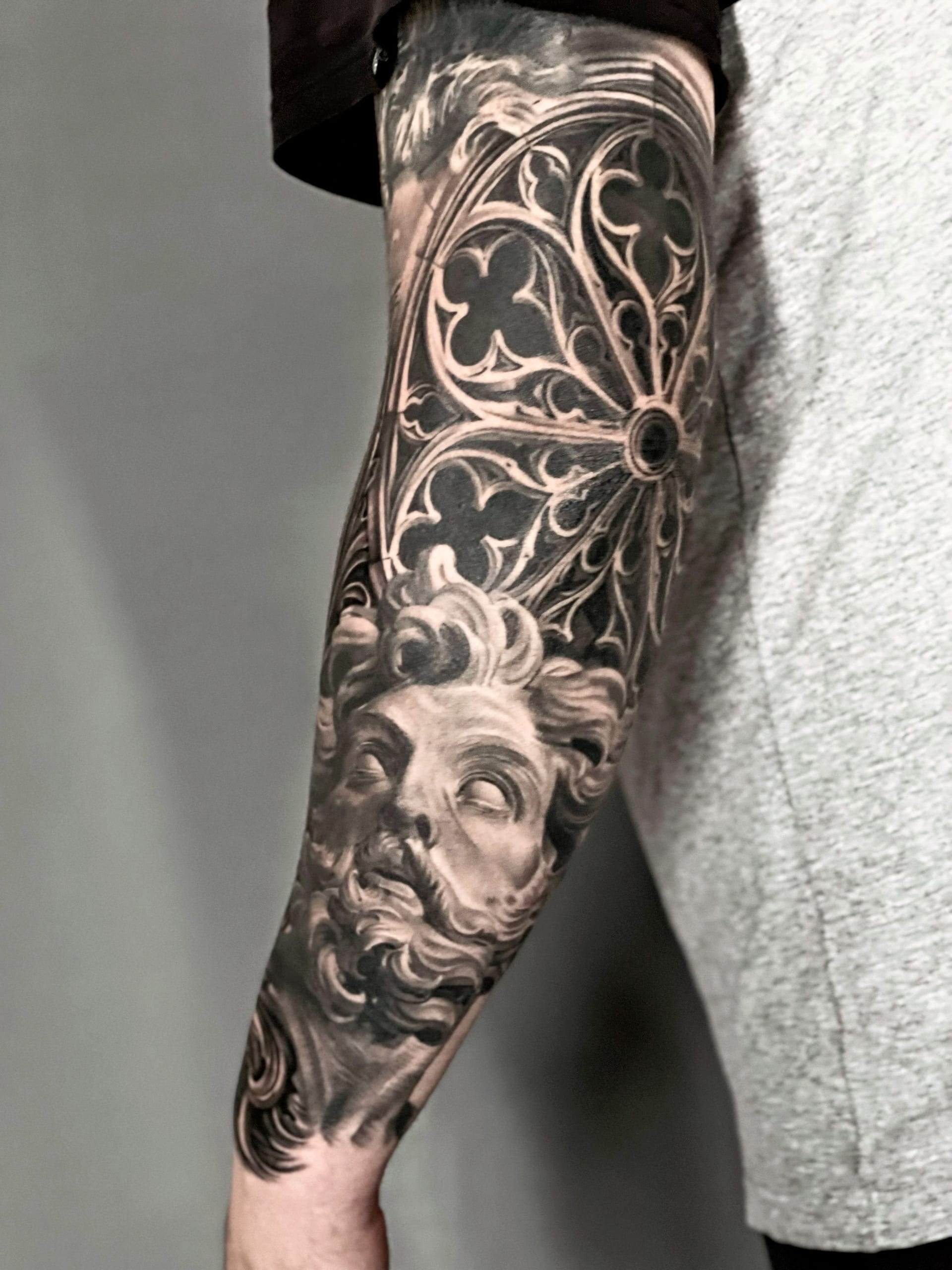
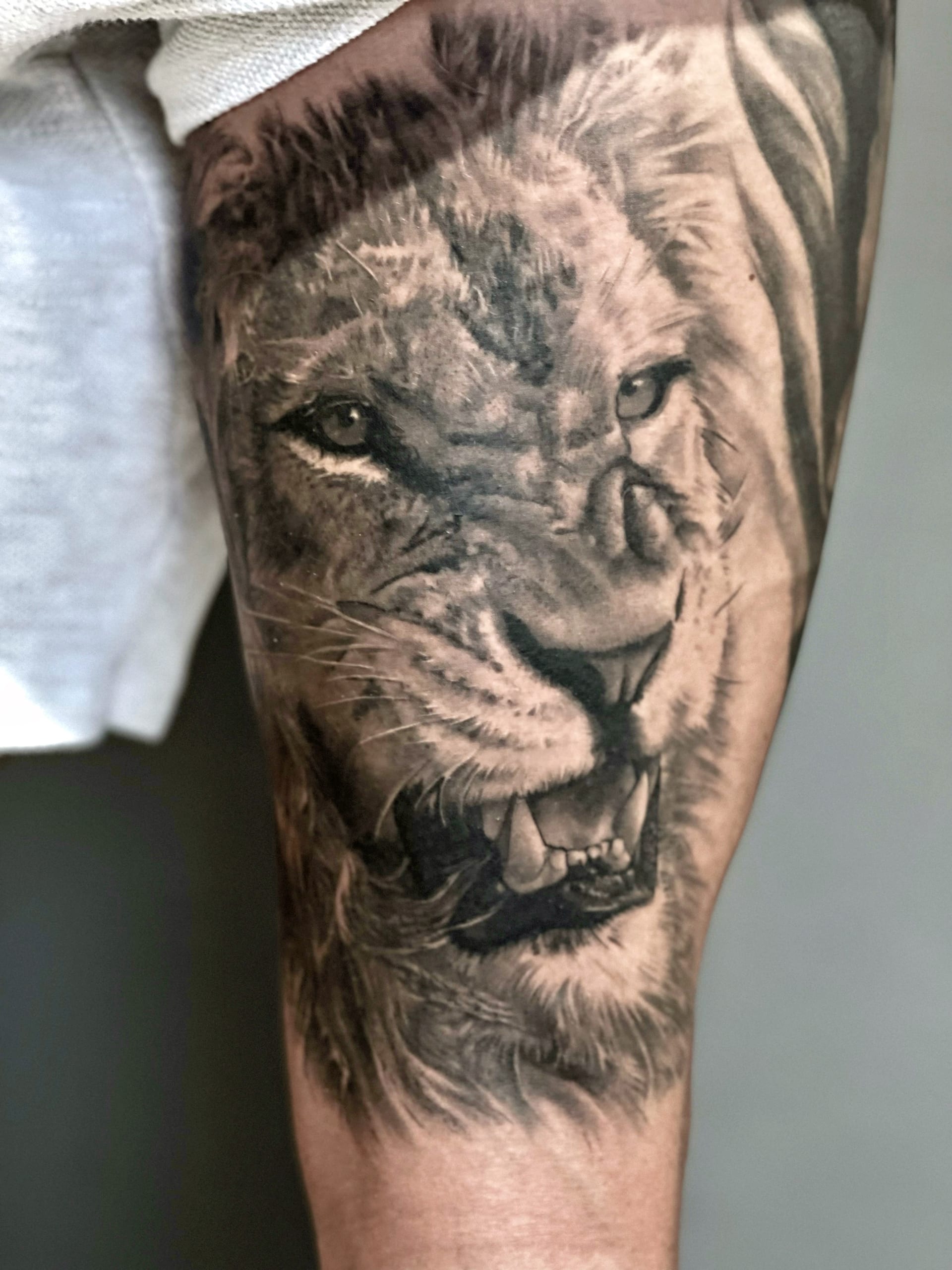
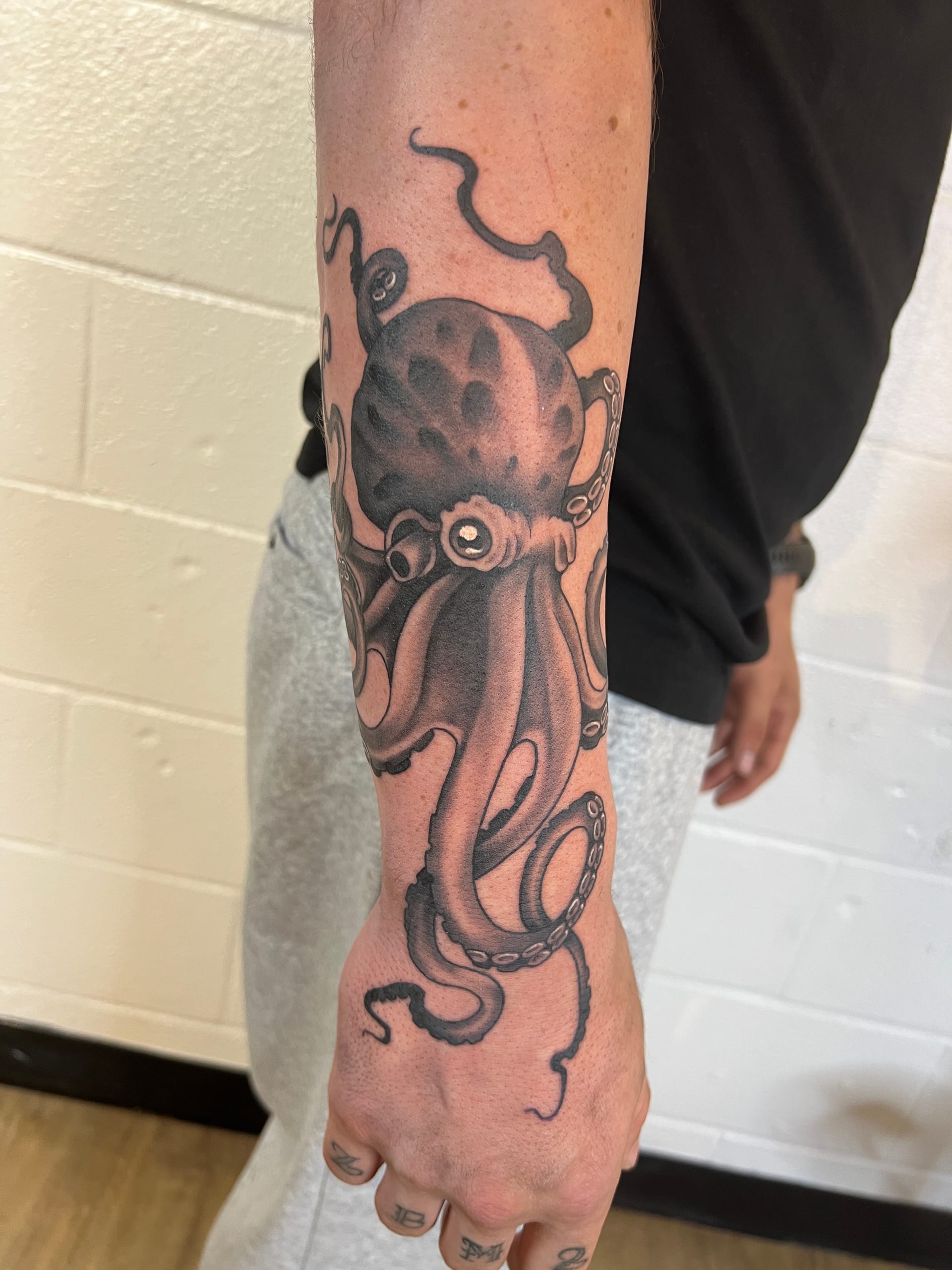
What to expect
Who to ask for black and grey
Arty
Traditional · Neo traditional · Cover-ups
Stellie
Illustrative · Floral
Leo Cadenazzi
Realism · Portraits
Slaine
Traditional · Neo traditional · Illustrative
Skott Kautman
Horror · Japanese · Polynesian
Hunter Knolmayer
Biomechanical · Illustrative · Geometric
Diego Perugini
Illustrative · Realism · Portraits
Roger Solis
Floral · Watercolor · Neo traditional
Smooth is slow
Good grey shading is built in passes and cannot be rushed, so a black and grey piece takes longer than a color piece of the same size. The payoff is depth that color cannot match and a piece that reads as one tone as it ages.
Leo, Diego and Stellie lead with black and grey; Skott, Hunter, Roger, Arty and Slaine all work in it. The artist pages show who leans realistic, who leans illustrative, who leans fine, and whose hand you want for it.
At a glance
- Ink
- Black, diluted to greys
- Range
- Realism to fine line
- Sessions
- By size; shading is slow
- Ageing
- Very good with strong blacks
- Artists
- Most of the crew
Questions people ask
Will the greys fade to nothing?
Light greys soften over the years; that is why the artist anchors every piece with solid black. Sunblock and a touch-up keep it crisp.
Can I add color later?
Yes. Many pieces start black and grey and take a single color accent later. Plan for it at the start if you think you might.
Is fine line the same thing?
Fine line is black and grey done with single needles and thin lines. Stellie works that way; see the illustrative page for more.